
Ecoprint Next Level
Learn to create crisp, vibrant botanical prints, and develop your own artistic style
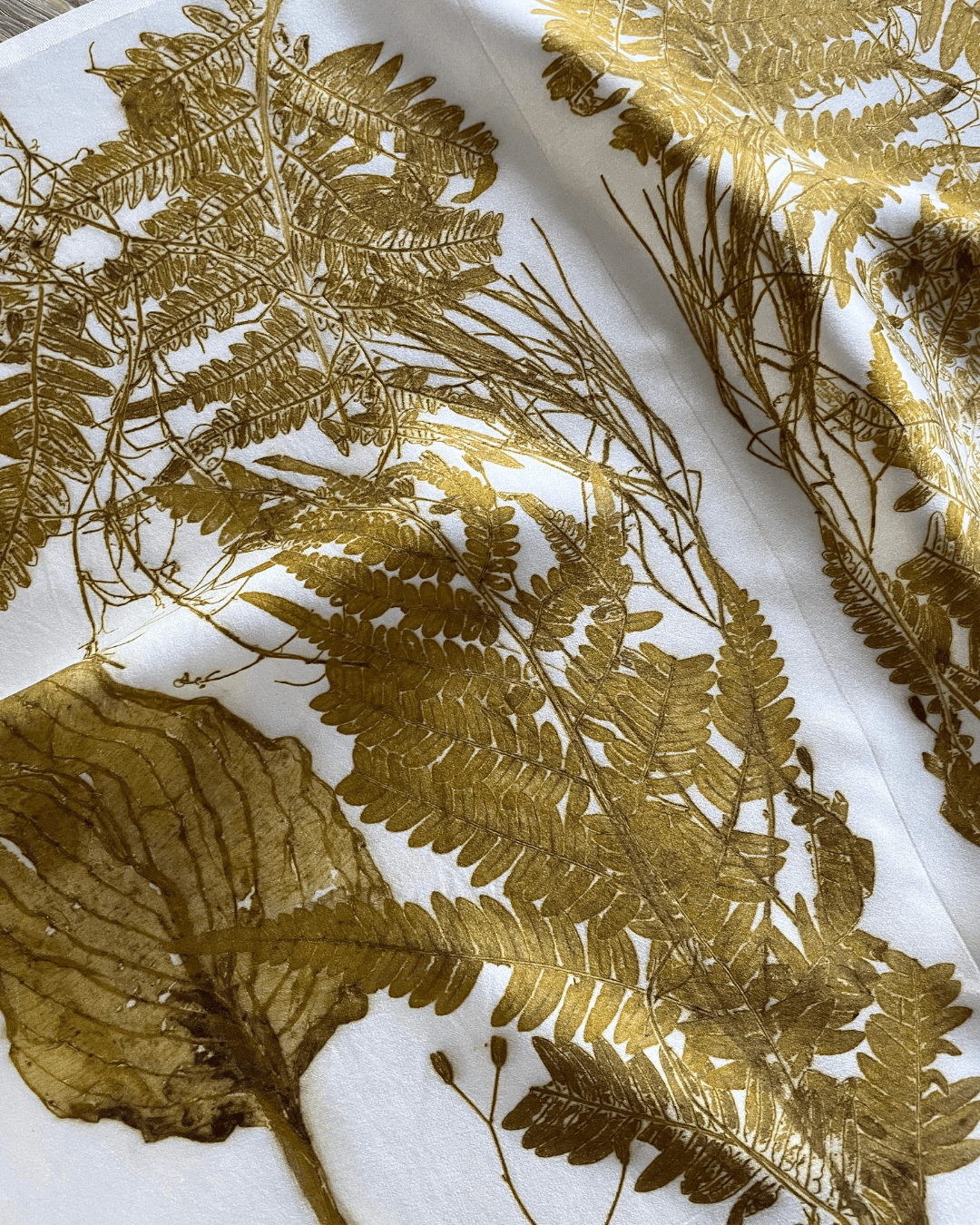
Join me on a creative journey into the art of Botanical printing.
This Ecoprint course is designed to give you a solid foundation for creating crisp, detailed plant prints — while gradually opening up more experimental techniques that elevate your work beyond the expected.
You will gain a deeper understanding of plant-based colors and Botanical printing processes, so you can begin to explore, experiment, and ultimately develop your own unique style within the world of Botanical printing.
Start creating crispy clear Ecoprints with confidence
Working with plants
is a dialogue
Many people discover Ecoprinting and Botanical printing through beautiful images online.
But when they begin experimenting themselves, the results often look very different.
Leaf shapes appear unclear, colors become muted or brown and the prints lack the vibrancy that first inspired them.
Why?
Because Ecoprinting
is much more than a technique
It is a beautiful collaboration between you, plants, fibers and more subtle factors.
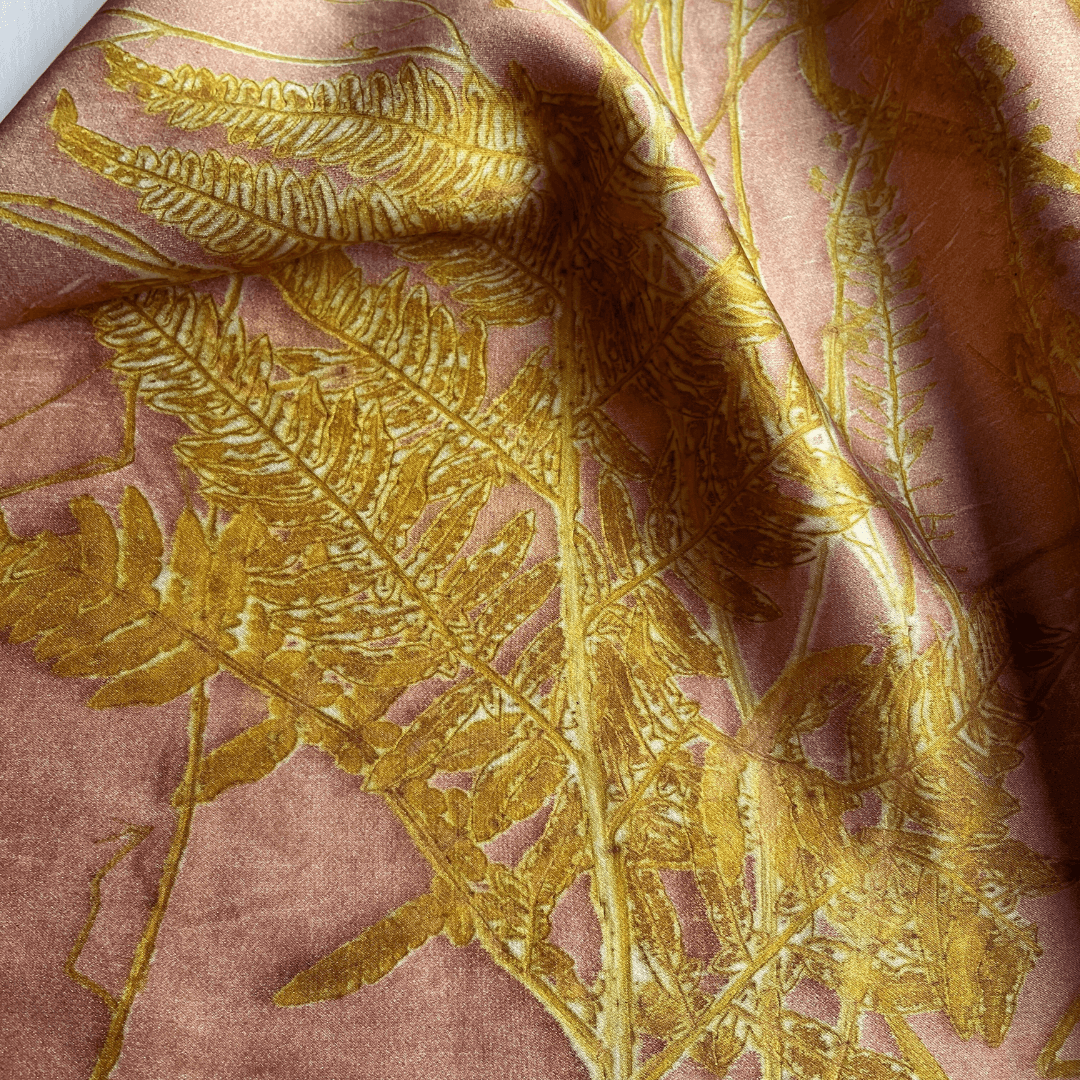
A leaf placed on textile can reveal surprising colors and intricate shapes — if the ecoprint process is understood and guided with care..
Without understanding these interactions, the process can feel unpredictable.
In Ecoprint Next Level, you will learn the principles thatallow your Ecoprints and Botanical prints to become clear, vibrant and expressive.
Learn what actually creates clear, vibrant ecoprints
Imagine This:
You receive carefully designed course material with exact recipes and step-by-step guidance.
You begin to understand how plants hold color.
How fibers respond.
How small adjustments change everything.
You dive deeper into plant-based colors and botanical printing techniques and discover how to create prints, that are not only beautiful — but crispy clear ecoprints, vibrant and intentional.
Each lesson opens a new layer.
You begin to combine the techniques.
To experiment.
To trust your process.
And over time,
you build a body of work that feels truly your own.
Start creating crispy clear ecoprints
Ecoprint Next Level is structured as a journey.
You begin by learning the fundamental craft techniques that create crispy clear botanical prints.
From there, the course gradually opens into more experimental approaches, that allow you to explore plant colors in new ways and develop your own artistic expression through Botanical printing.
In this course you will learn how to:
• Create crisp Ecoprints on both cellulose and protein fibers
• Understand how plants, mordants and textile fibers interact
• Achieve vibrant colors in your Ecoprints using leaves, flowers and natural dyes
• Gather, press and preserve plants for year-round Botanical printing
• Work successfully with plants throughout the seasons
• Combine Ecoprint- and Botanical printing techniques in creative ways
• Develop your own signature style in botanical printing
The course combines solid craft knowledge with space for curiosity and discovery.
Learning by observing the process
The course combines video lessons with extensive written guides.
In the videos, you will see my hands working directly with plants and textile in the ecoprinting process, and you will be able to follow the process step by step — almost as if you are standing beside me in the studio.
This way of learning allows you to notice the small details that are often difficult to describe,
and understand how each part of the process influences the final print.
Alongside the videos, you will receive written guides that support your understanding of the ecoprinting process, and allow you to revisit the techniques whenever you need.
This makes it possible to continue refining your process and developing your own practice over time.
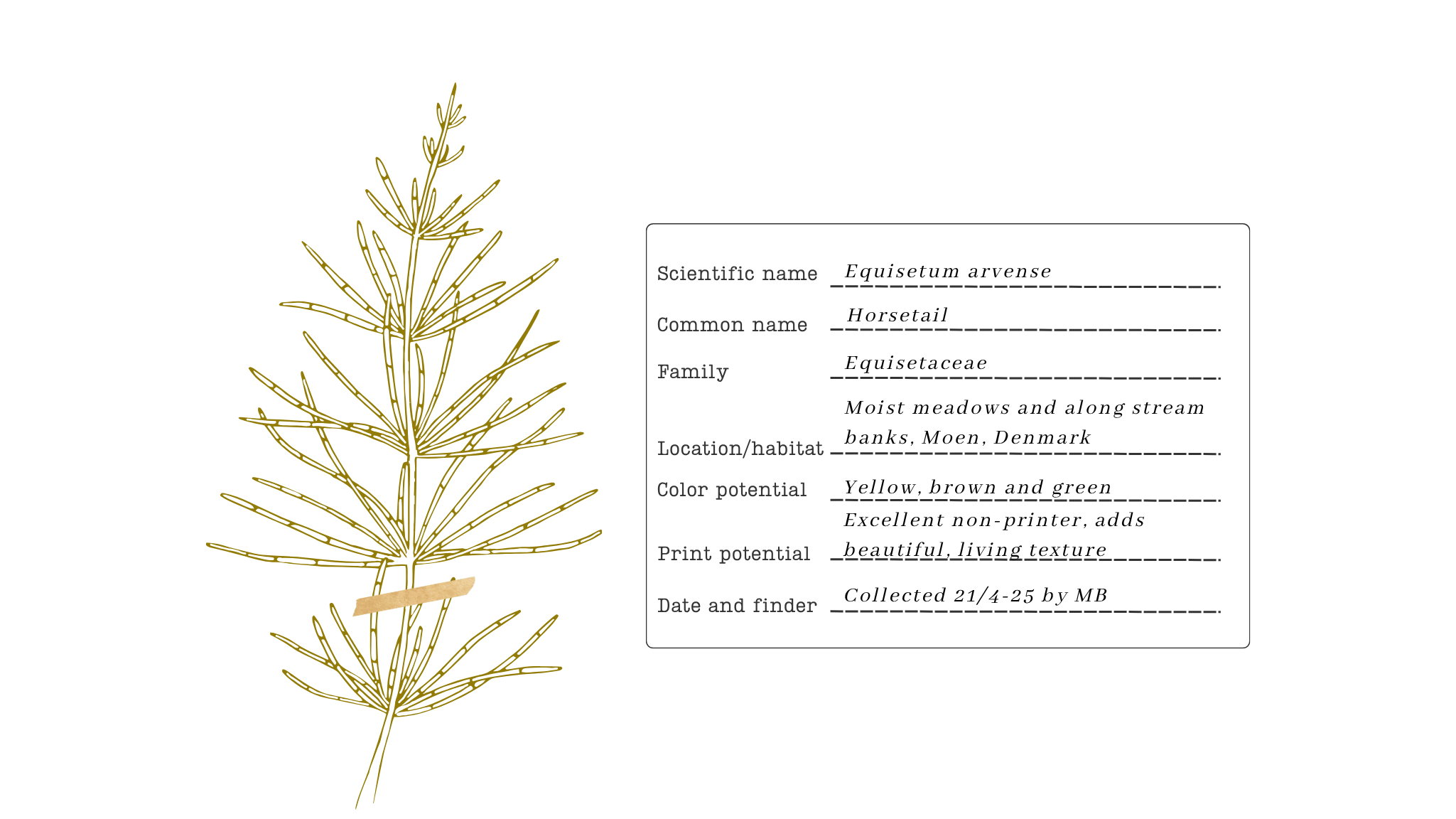
What you’ll experience inside this Ecoprint course
✔ In-depth course material with video instructions, where you see my hands working directly with the craft of Botanical printing
✔ 150+ pages of downloadable guides, lists and tutorials — yours to keep
✔ Proven recipes and formulas for creating crispy clear ecoprints you can return to again and again
✔ The knowledge behindcrisp, clear prints
✔ Seasonal printing techniques that allow you to work year-round, not only in summer
✔ Tools and methods that elevate your results immediately
✔ A deeper understanding of the ecoprint process — so your results become consistent
✔ Access to research and knowledge you won’t find elsewhere
And if you need support along the way — you can always reach out by email.
Get full access to the Botanical Printing Library
Inside Ecoprint Next Level
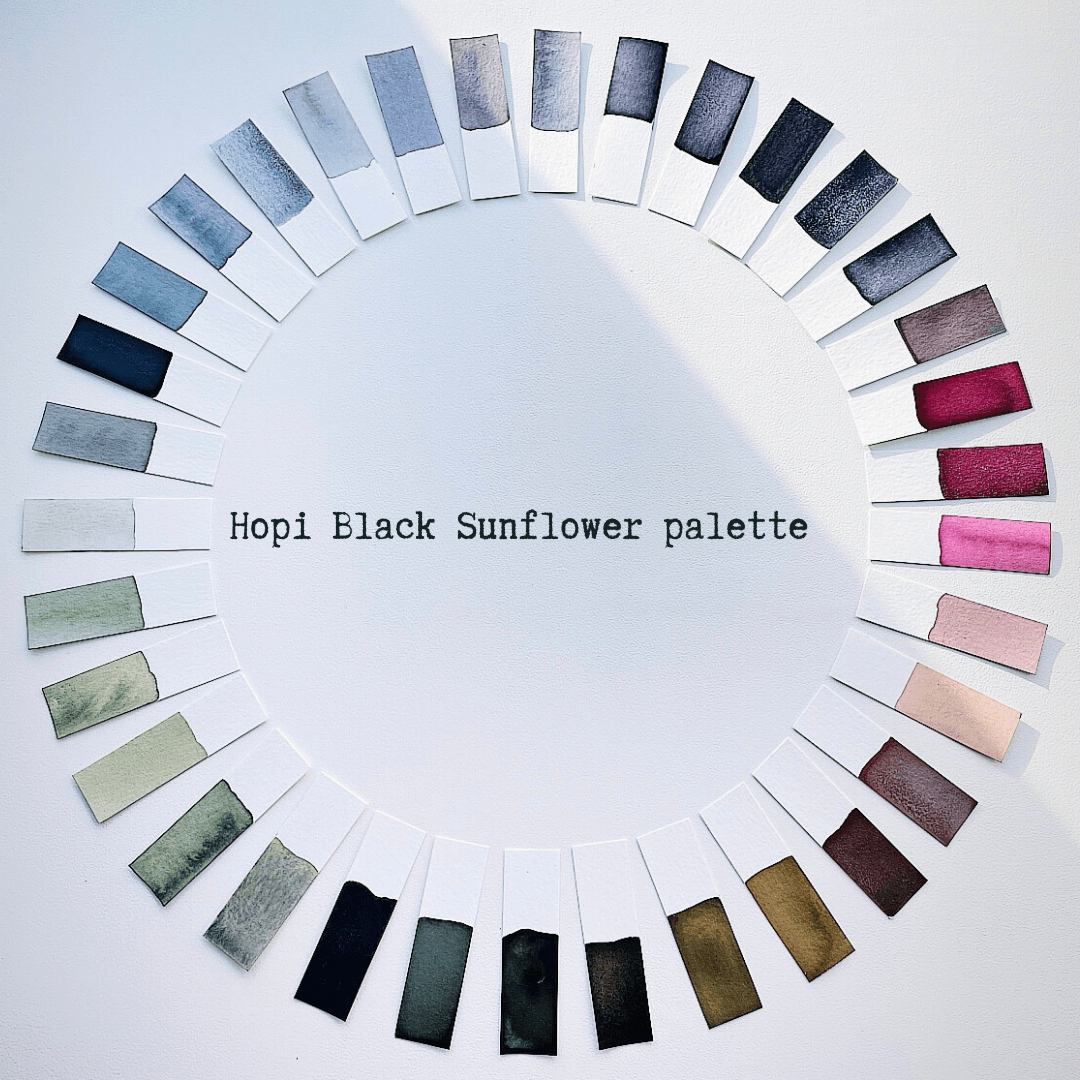
Module 1
A complete introduction to color modification
Understanding plant colors – Learn to see plant colors on a deeper level — one of the most powerful tools in Botanical printing.
Unlocking hidden hues – Discover how to expand each natural color into a richer and more vibrant spectrum.
Reading your prints – Understand what is happening in your Ecoprints, and how plant colors and mordants influence the results.
Building a color reference library – You will learn how to Develop a modification practice, and Create your own personal library of plant-based color palettes through hands-on experimentation.
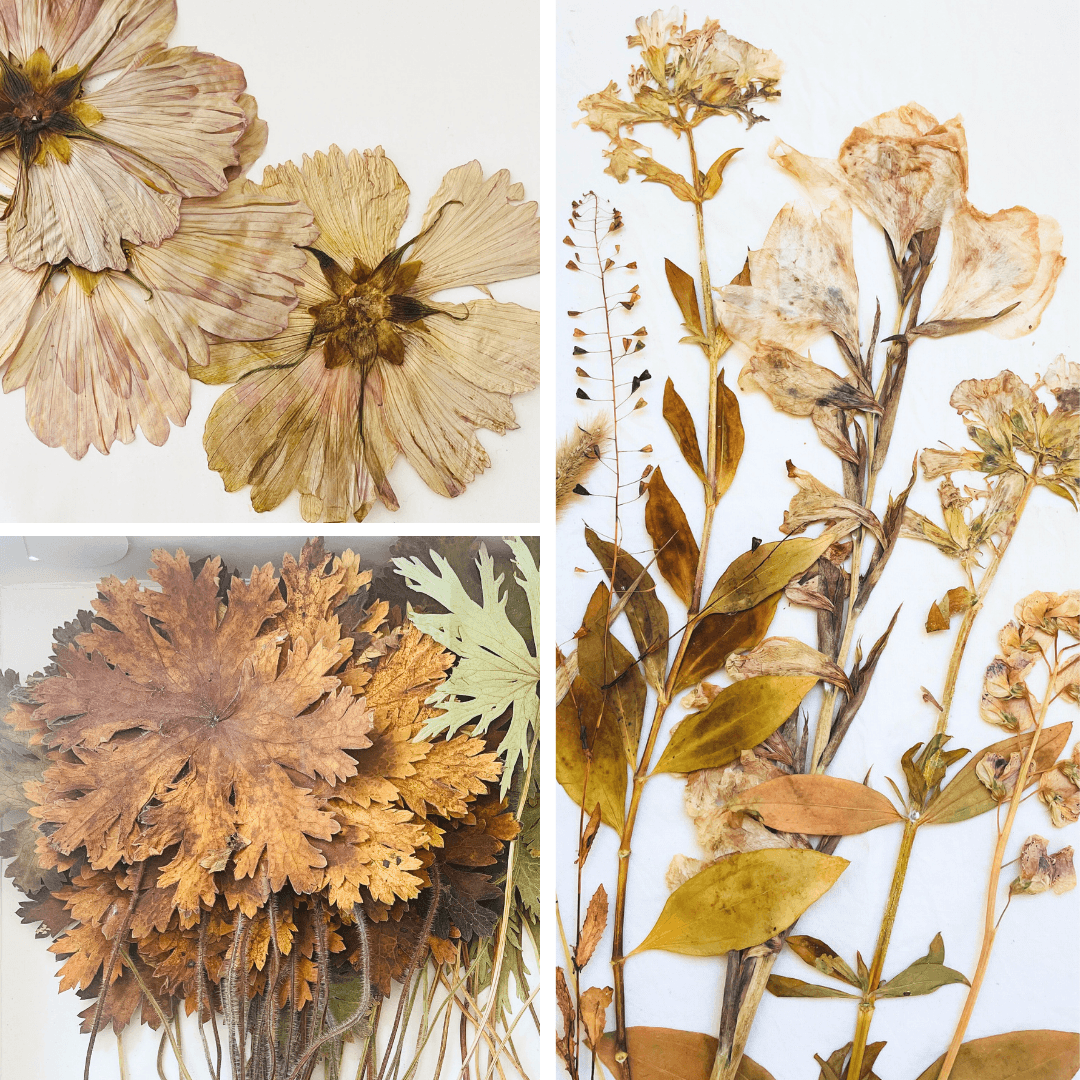
Module 2
Introducing seasonal printing
A complete guide to gathering and preserving plant materials that allow you to work with ecoprinting and botanical printing all year round.
Gathering practice – Learn how to collect plant materials at different stages and across seasons, and gain inspiration to develop your own gathering practice over time.
Pressing and preserving – Learn how to press and preserve plant materials in a way that maintains both structure and color potential for Ecoprinting.
Working with a wider range of materials – Explore how to collect and work with other types of plant materials, such as autumn leaves and decayed matter — opening new expressions and textures in your botanical prints.
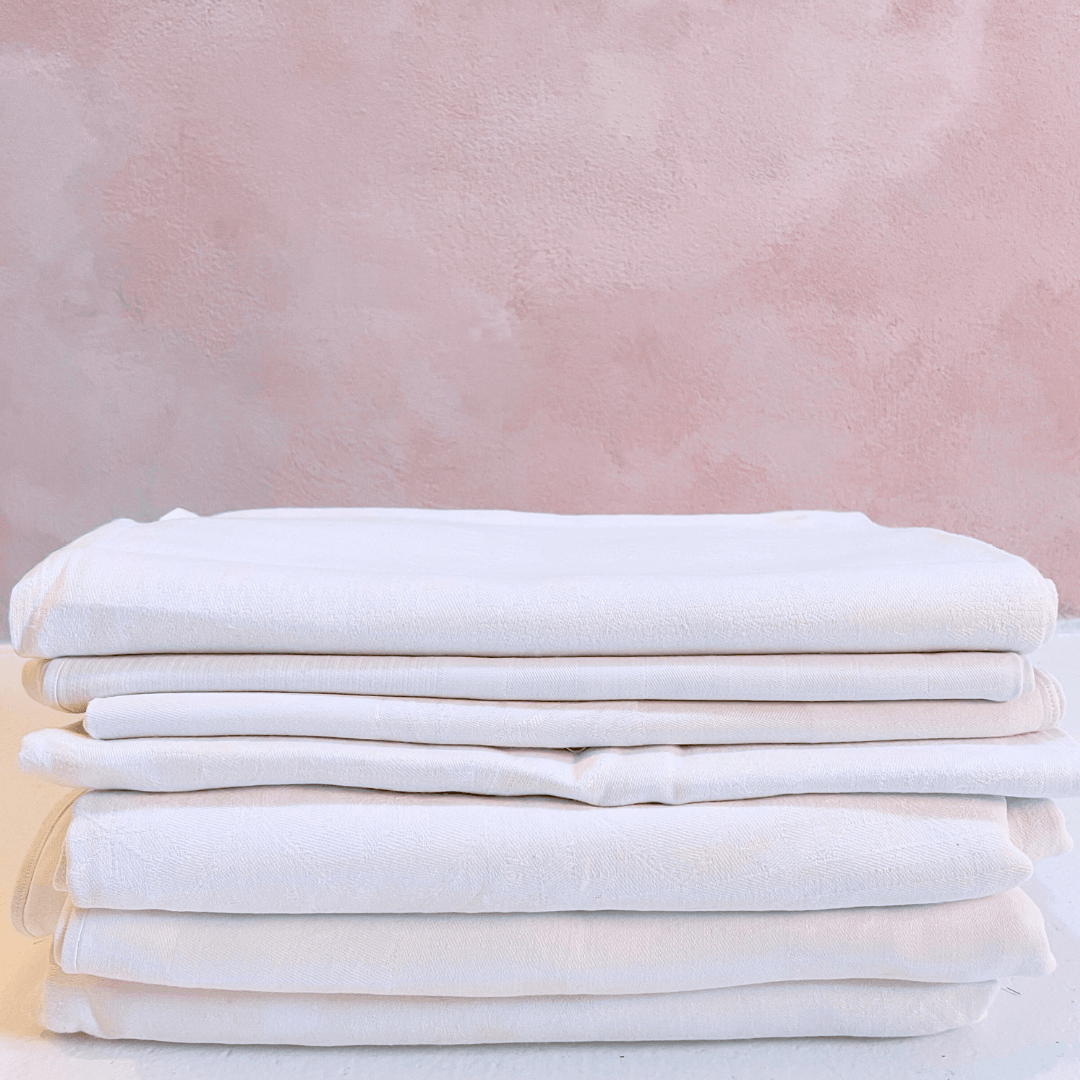
Module 3
The foundation for crispy clear prints
Understanding the process – This module offers a more theoretical perspective, giving you a solid understanding of the key factors that interact throughout the Ecoprinting process.
Finding the right moisture balance – Learn how moisture affects your prints and how to achieve the balance needed for precise color transfer and crisp botanical impressions.
Understanding materials and fibers – Explore different fiber types and how they interact with plant-based dyes.
Reading and refining your process – Learn how to analyse your workflow and trace it back, so you can understand what happens in the Ecoprint process, when results differ from what you expected.
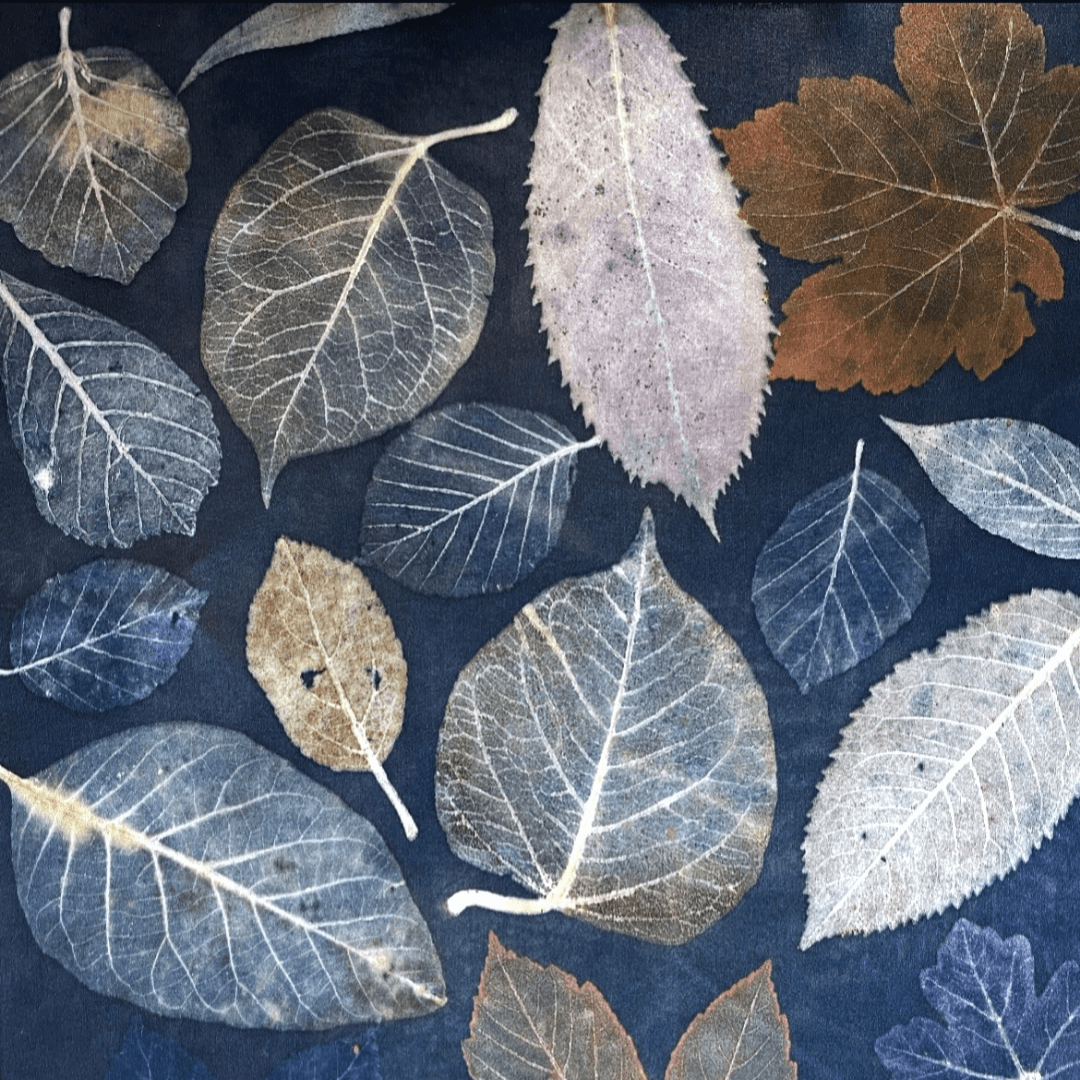
Module 4
Magic Mordants
A complete guide to preparing fabric for clear and vibrant botanical prints.
Optimal fabric preparation – Learn how to prepare your fabric to achieve the sharpest and most vibrant Ecoprints possible.
Working with mordants – You will be introduced to my carefully developed mordants for both cellulose and protein fibers, each suitable for different expressions.
Understand how each step influences the final result, and how you can adjust your mordants to achieve different color variations in your prints.
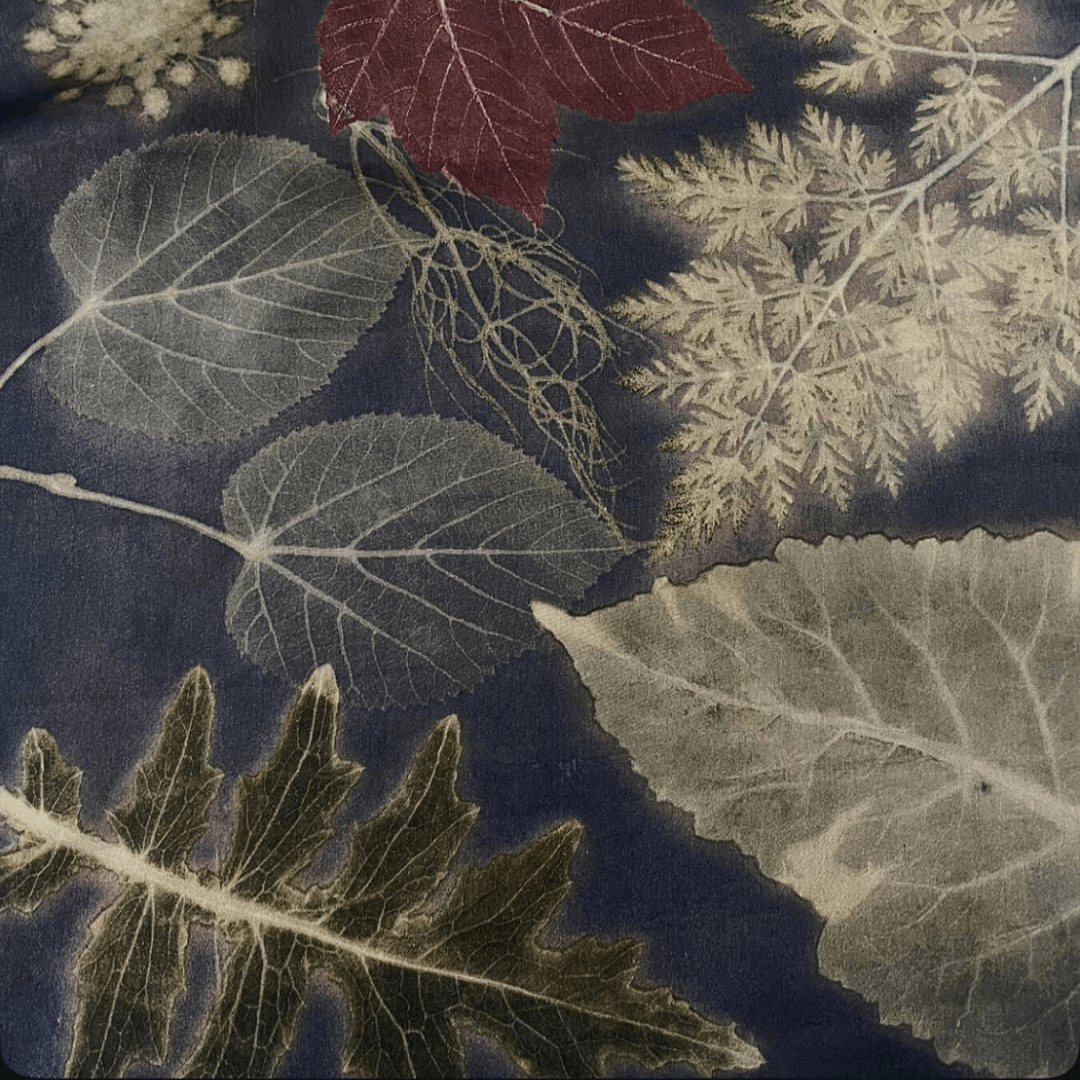
Module 5
Printing with background colors – Learn how to develop background colors using different plant materials, and how these influence the depth, clarity and expression of your ecoprints.
Working with plant materials – Explore how to work with both fresh and dried plant materials, as well as tannins, to build a background color with precision.
Building and bundling your layers – Refine how you layer and roll your plant materials and fabrics to achieve crisp, well-defined ecoprints with clear impressions.
Steaming and fixing your prints – Follow a structured approach to steaming and fixing your ecoprints, ensuring lasting color and consistency.
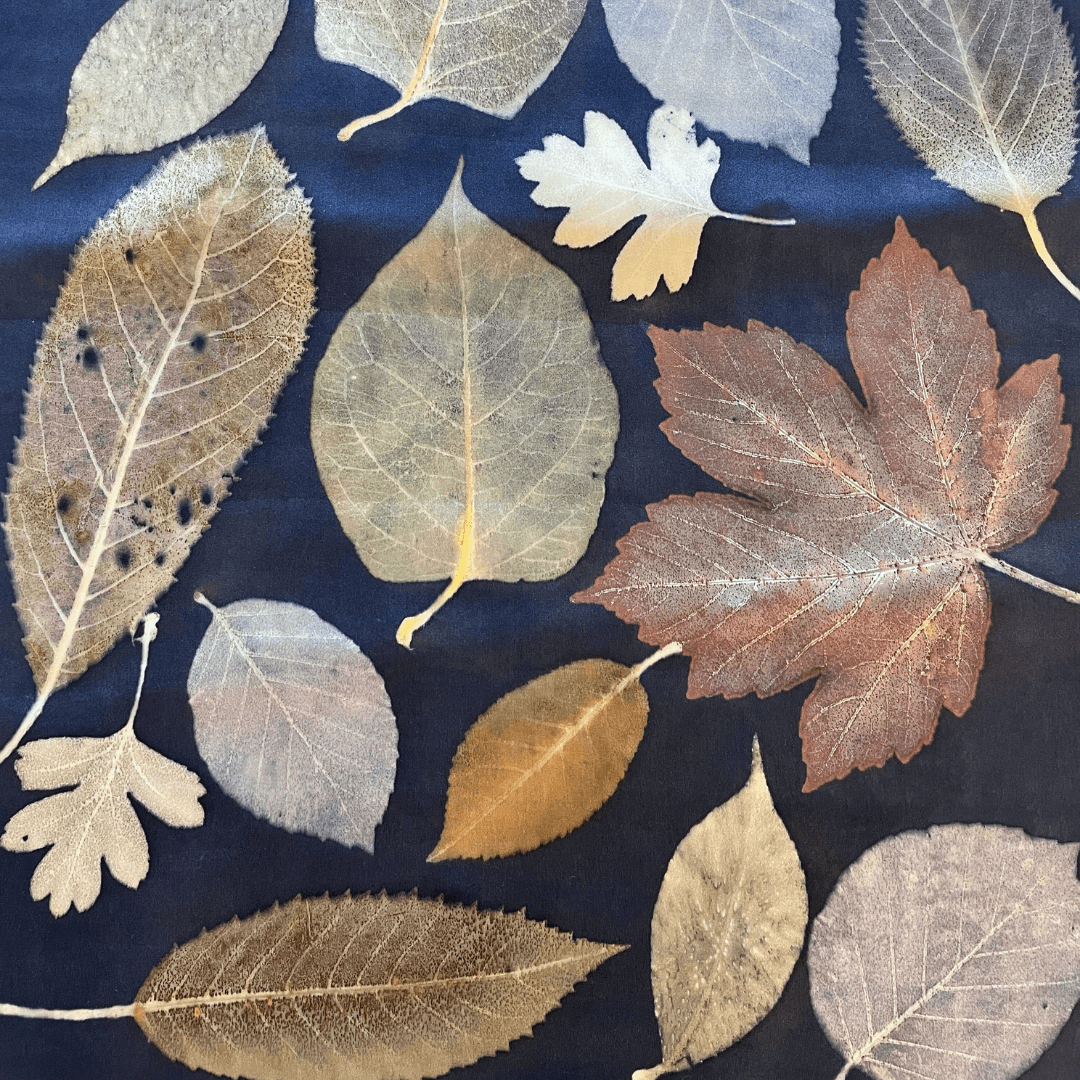
Module 6
The art of Seasonal Printing 1
An introduction to seasonal techniques and plant materials for year-round botanical printing.
Exploring seasonal techniques – Discover a range of methods, each with its own expression, suited for creating botanical prints throughout the year.
Autumn leaves and shifting pigments – Learn how autumn leaves change in color and pigment composition, creating prints with a different depth and character than those made with summer leaves.
Mixing and matching techniques – These approaches each have their own expression, but can also be combined to create layered and varied botanical prints that are uniquely your own.
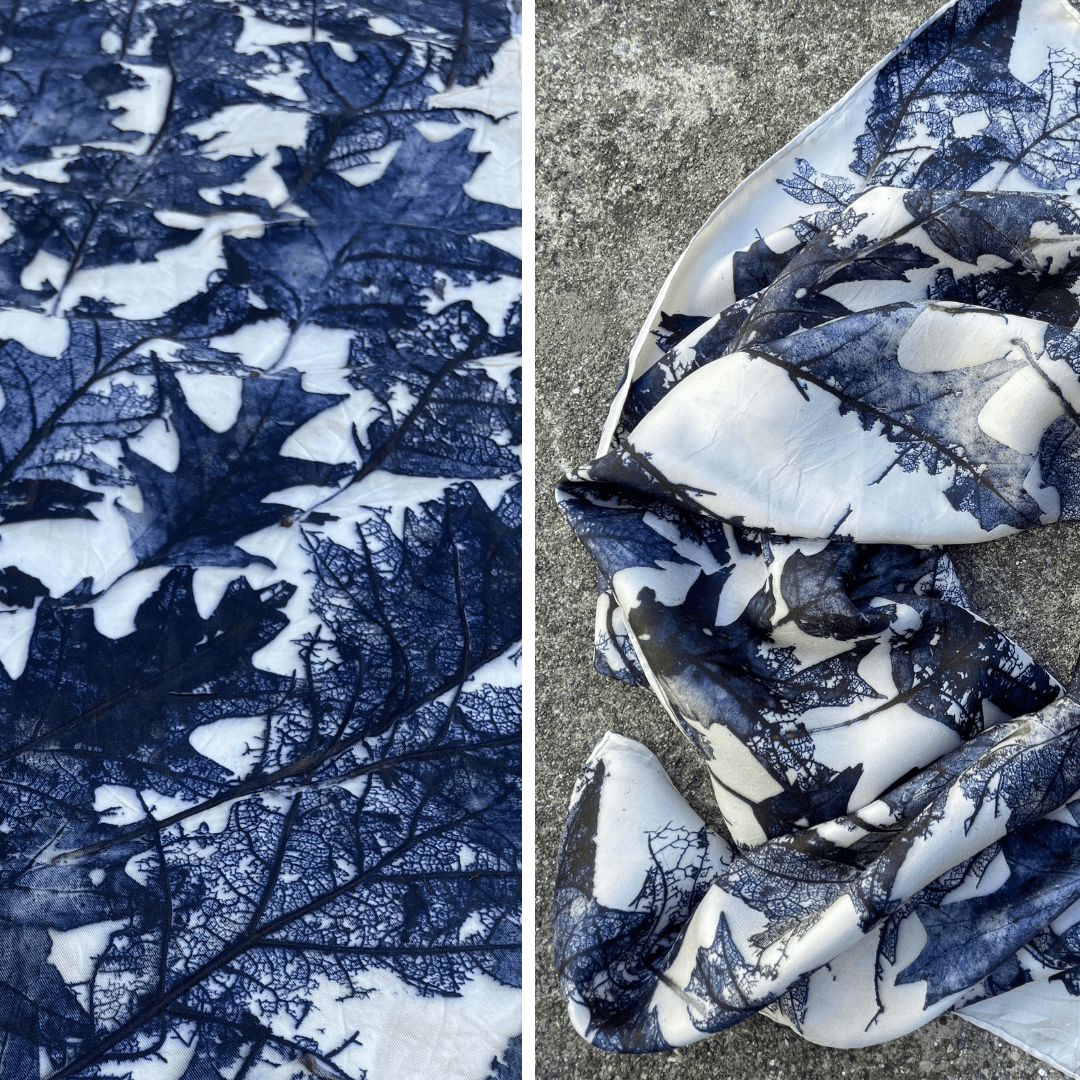
Module 7
The art of Seasonal Printing 2
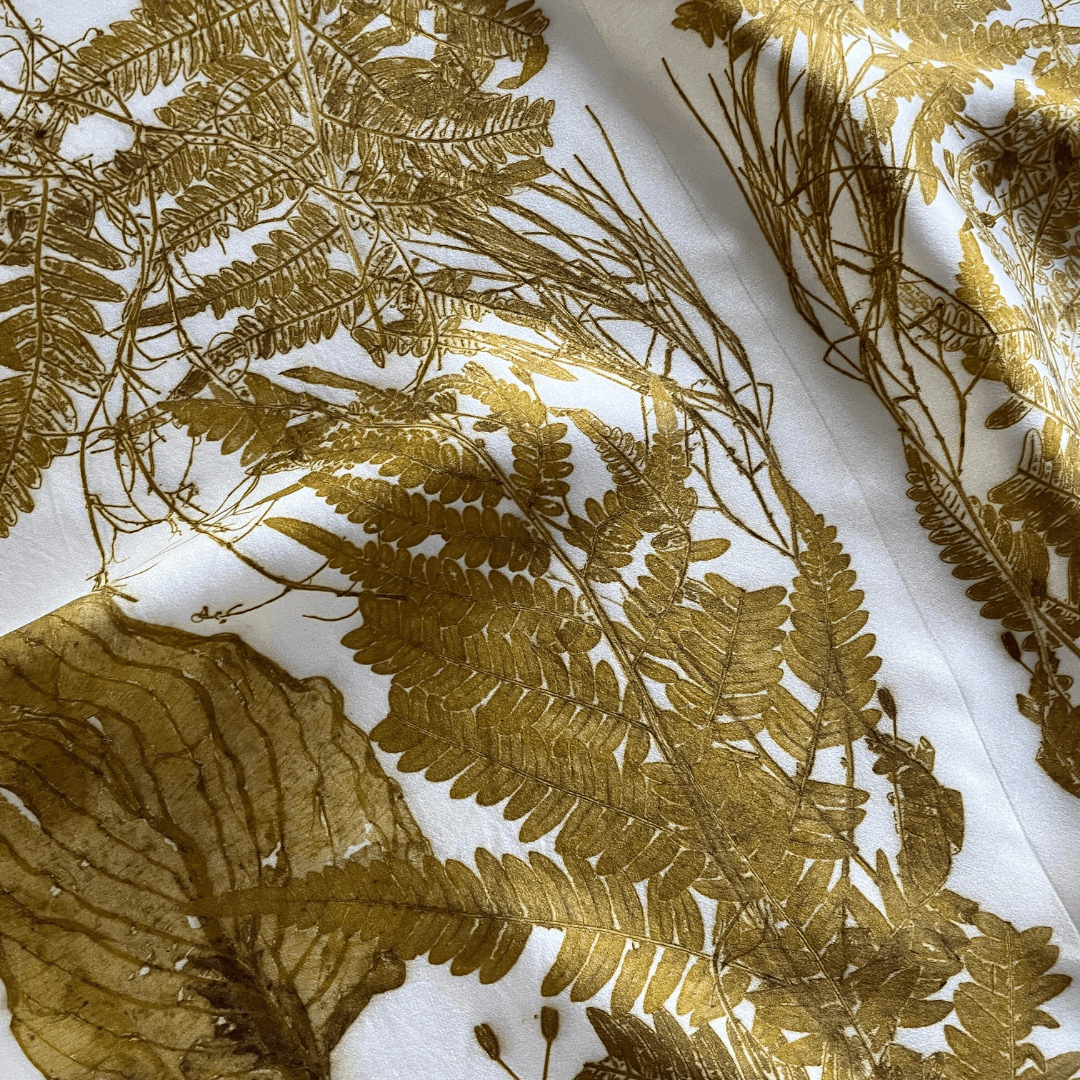
An exploration of lace leaf printing, decay and expressive botanical prints.
Lace leaf printing – Learn how to create delicate, lace-like botanical prints using fragile skeleton leaves that leave behind intricate natural patterns on textile.
Imprints of time – Explore how decayed plant materials can be used to create prints that capture subtle textures, soft structures, and the traces that emerge as leaves wither and settle.
Creating depth and movement – Discover how variation, asymmetry and raw, organic qualities can bring a sense of depth and movement to your prints.
Graphic expressions: This technique opens up the possibility of creating highly graphic Botanical prints.
Module 8
The Art of Seasonal Printing 3
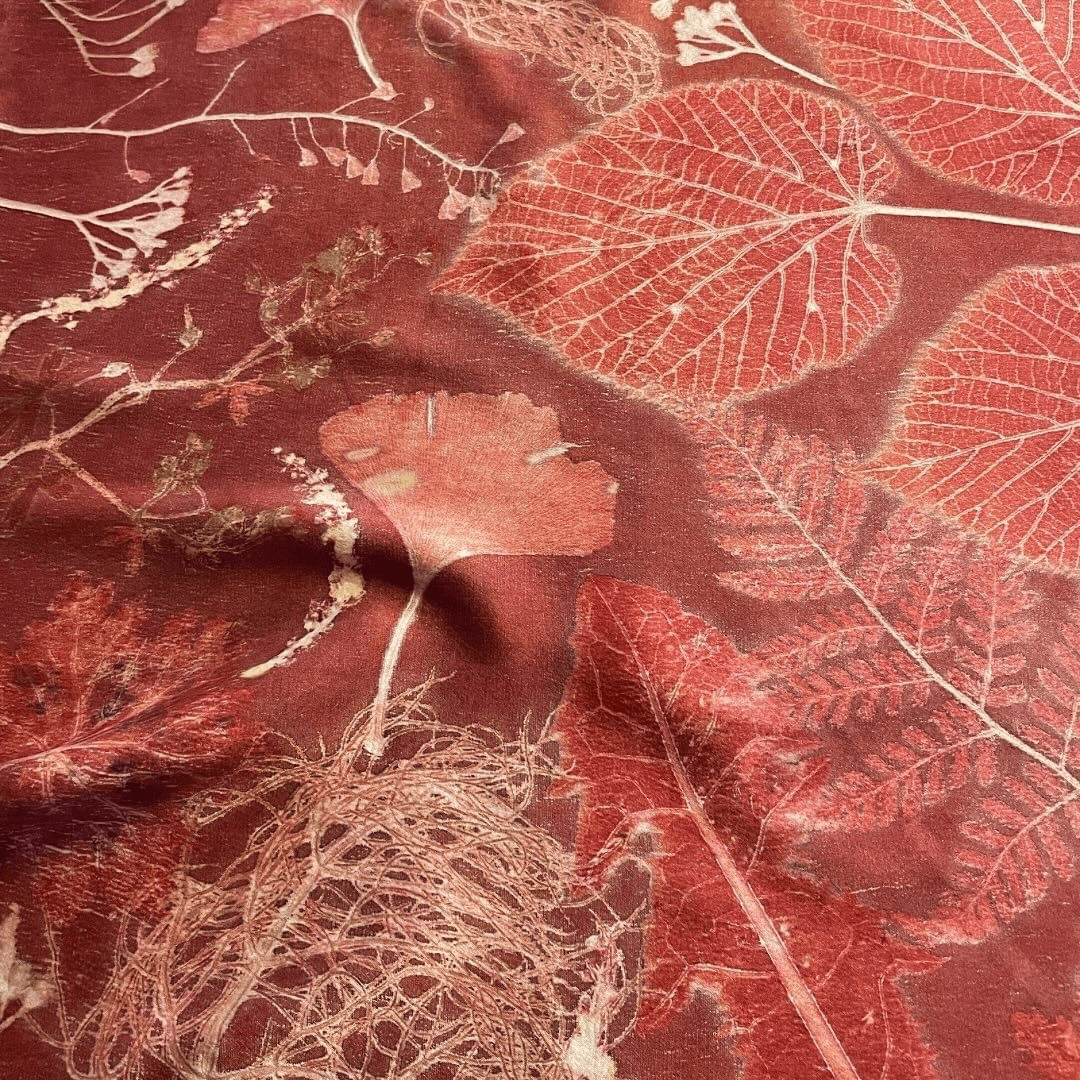
An exploration of wilderness printing, layering and organic botanical compositions.
Wilderness printing – Learn to work with the raw beauty of plant materials in a more intuitive and organic way, creating Botanical prints that evoke the gentle, untamed feeling of a meadow.
Tone-on-tone layering – Discover how to build Botanical prints in soft, layered colors that create a silhouette-like expression, while still allowing fine and delicate details to emerge.
Creating organic compositions – Learn how to arrange plants in a freer, more natural way, allowing the materials to guide the final expression.
Module 9
Unlocking the Secrets of Madder
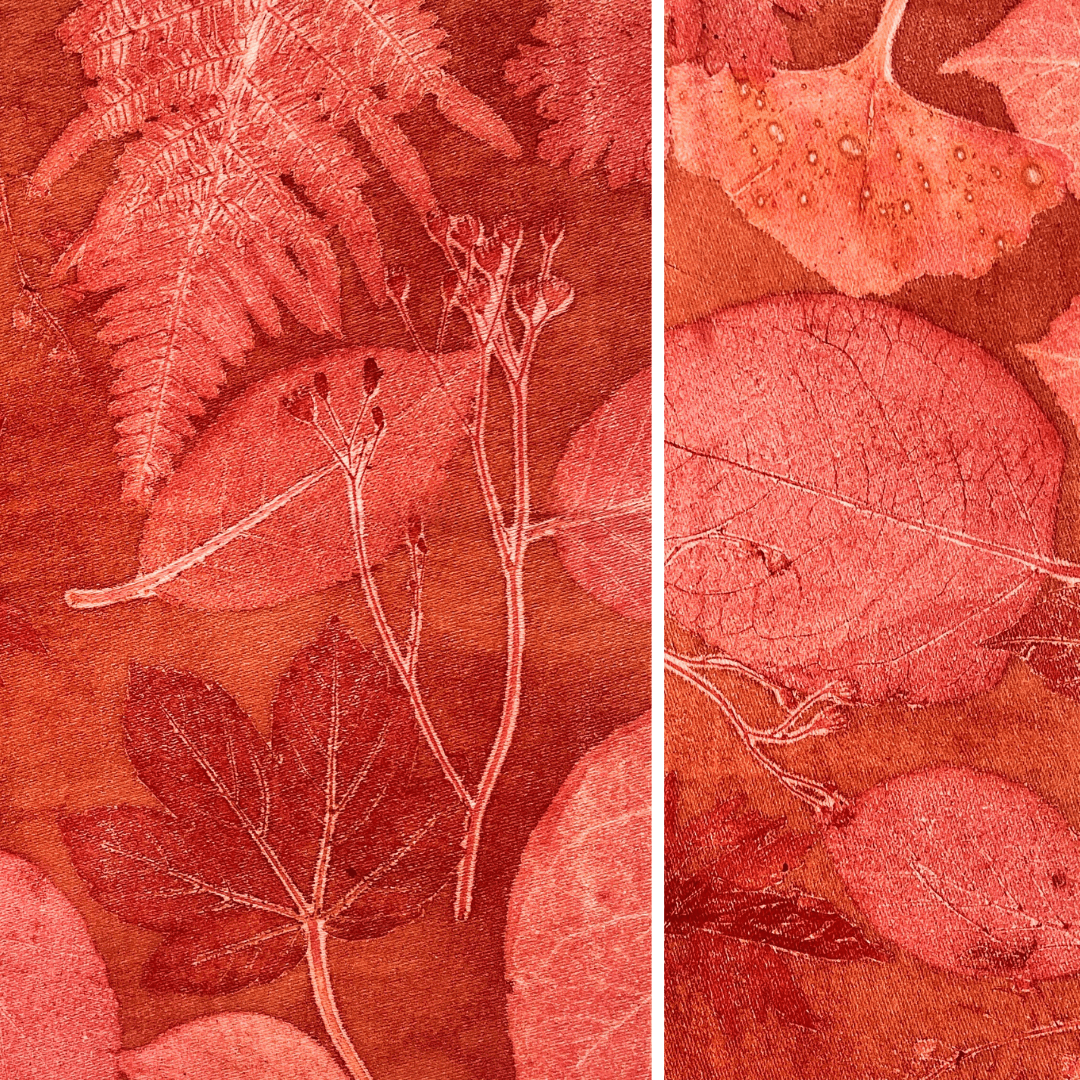
Understanding madder – Gain a deeper understanding of madder root and its many possibilities. As one of the world’s oldest dyes, it connects your practice to a rich cultural legacy of working with botanical colors and natural dyes.
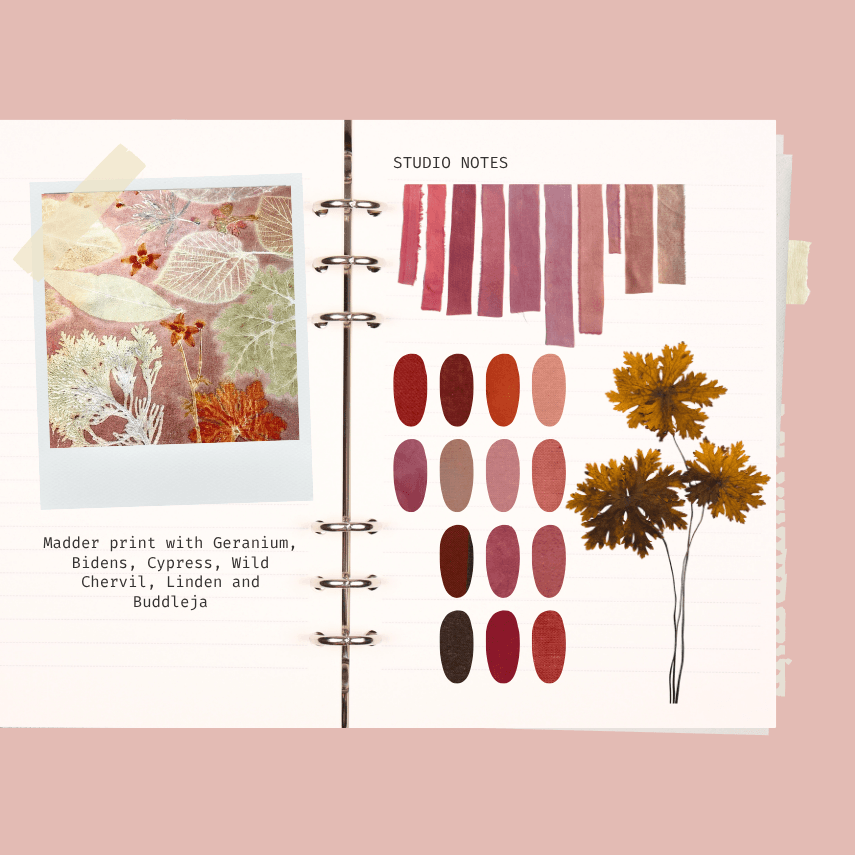
Exploring the color palette - Beginning with the lighter shades such as soft rose and nude tones, and how these unfold in your ecoprints, we dive further into the depth of madder’s palette, working with its darker tones.
Working with plant combinations – Discover how madder interacts with the plants in your compositions, creating new tones, layers and subtle variations in your prints.
In the first madder module we will explore madder expressions on Protein fibers.
Module 10
Diving Deeper with Madder
An exploration of working with madder on cellulose fibers.
Understanding the complexity – Madder is a complex dye when working with cellulose fibers. Unlike protein fibers, where results tend to be more intense, madder on cellulose often appears in lighter shades such as soft pinks or peach tones.
Advanced color exploration – Building on your foundation, this module takes you deeper into madder’s palette, working with more advanced processes on cellulose. This allows madder to move beyond pale tones, creating clearer, deeper and more expressive Ecoprints.
Learn what influences the depth and intensity of madder on cellulose, and how this affects your ecoprints, compared to immersion dyeing.
Module 11
Acid printing
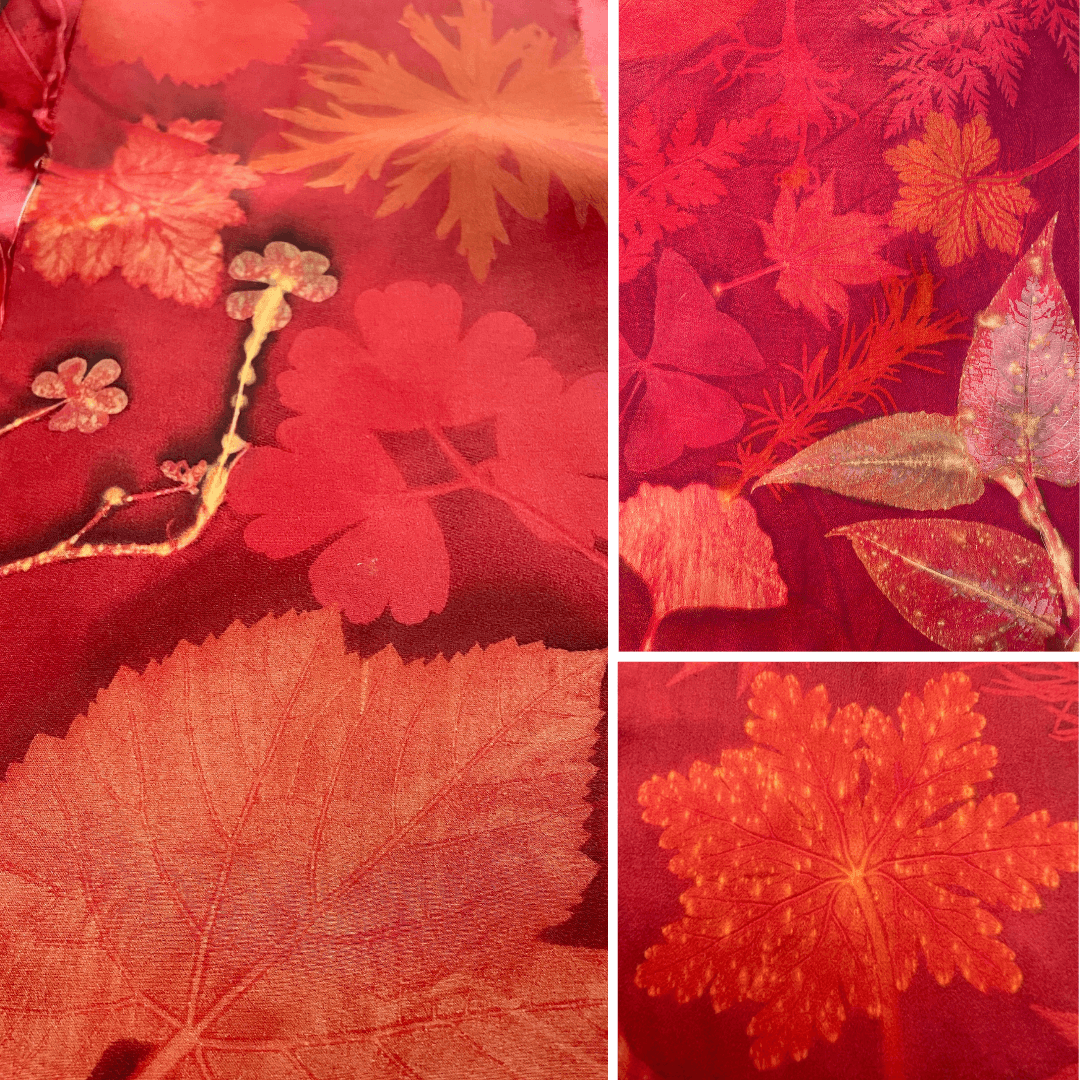
Understanding acid printing – Learn how different plants have the ability to discharge natural colors, revealing new textures, contrasts and botanical impressions in your prints.
Working with plants and color – Explore which plants and colors respond well to acid printing, and how to use them to achieve clear and dynamic ecoprints.
Creating depth and contrast – Discover how this technique can be used to build depth in your prints, adding variation and visual complexity.
Experimentation and combinations – Learn how to combine different plants, colors and approaches, allowing you to create prints that are varied and uniquely your own.
Module 12
Signature Style Through Technique Fusion
An exploration of combining techniques and developing your own artistic expression in Botanical printing.
Combining techniques – Learn how to mix and match the methods from previous modules, allowing different processes, materials and approaches to work together in new ways.
Working across materials and color – Discover how plants, mordants and color processes can be combined to create variation, depth and unexpected results in your prints.
Developing your own visual language – Use the techniques and experiments from the course as a foundation to refine your personal style and create work that reflects your artistic direction.
A practice of exploration – Gain inspiration to continue experimenting, combining and evolving your approach, so your work can grow over time.
Ecoprint Next Level is more than just a course.
Ecoprint Next Level is a comprehensive body of work — a carefully developed library of techniques, processes and material knowledge built through years of research into plant-based colors and botanical printing.
Inside the course, you are not only guided through methods.
You are given insight into the thinking behind them — so you understand not just what to do, but why it works.
Throughout the videos, you follow my hands closely as I work.
You see each step unfold — the small adjustments, the decisions, and the details that are often difficult to describe, but essential to creating crispy clear ecoprints.
This way of learning allows you to move beyond trial and error, and begin working with greater clarity, consistency and confidence.
Get full access to the Botanical Printing Library

✓ In-depth course with video lessons — see my hands working step by step
✓ 150+ pages of guides, recipes and resources — yours to keep
✓ Techniques for clear, vibrant prints and consistent results
✓ Methods for working all year round with botanical printing
✓ 3 years acces to a library of research-based knowledge you won’t find elsewhere
We are thrilled to be out in 50+ Countries
Hear what our students are saying
-
![]()
Dear Mette, thank you. Your course is so rich, so thoughtful of nature, so well thought through, informative, well prepared and structured, and beautifully filmed - I hardly can find the words to describe what it is to study with you. I am so excited everyday, when I can start studying again. I planted many lovely plants which are suitable for ecoprinting, including ferns, and there are countless plants in abundance in and around our village❤️
Student from Romania
-
![]()
Hi Mette, I purchased your course last fall and I have been absolutely thrilled with all the you share! I live in Canada, and I am a naturalist, permaculture gardener and environmental educator. My love for plants is forever growing and deepening… In part thanks to your course and my ongoing, exciting experiments with botanical printing! THANK YOU for sharing your passion, curiosity, experience and knowledge. I am deeply grateful for this new dimension to my profound love for plants and Nature. I can now enjoy their immense and diverse beauty all year long and expand my interest in textile art!
Student from Canada
-
![]()
Hi Mette, I bought your course, and I finally started to experiment your recipes for silk. So I started with logwood and then the madder Magic project, and now it’s time to give you a feedback. I am just enthralled - your course is just fantastic and so inspiring. I have been looking for a vibrant red on silk for a long time and now I am so close and I am so happy. I am just fascinated by the richness of the content of your course. You have fuelled my creativity and I just expand. Thank you so much Mette, I am really grateful. I have reached a next level thanks to you and I am so eager to go on experimenting.
Student from France
-
![]()
I finally bought your course and I am very impressed with all your research and different approaches to combining background colors and foliage colors. You have done an exceptional job that opens up a lot of possibilities and I thank you for sharing it.
Student from France
-
![]()
I am an unconditional fan of your creations. I find your course much more interesting than those of your competitors. You are clearly of a higher level!
Student from The Netherlands
-
![]()
Hi Mette, I have purchased your course and am reading everything for the second time. It is such a wealth of information, very clearly explained and illustrated. I am so impressed and excited to begin using your techniques and recipes. Thanks for your wonderful course. I myself am a teacher, so I know how much work you have put into this. Brava!
Student from US
-
![]()
I am half way through your course and I am loving it! The amount of information and level of detail, the balance between videos and pdfs, the structure, the simplicity....it´s engaging, easy to follow and extremely enjoyable! I am learning a lot!
Student from Spain
-
![]()
Dear Mette. I signed up for your course and I can't thank you enough for your immensely generosity in providing so much great content that money can't pay for. I can only imagine the effort it takes to organize everything and consider it a treasure that we can never thank you enough for. Many, many thanks! With much love.
Student from Italy
-
![]()
I can’t hardly wait to learn from your new lectures 🌷 I’m deeply impressed how easy and deeply you go into the botanical world! I’ve learned so much from your lessons and improved my ecoprinting skills and knowledge, thank you so much 💜 Beautiful greetings from Serbia 🌿
Student from Serbia
-
![]()
I wanna say thank you for your great course. I learned so much and my ecoprints are much better than before. Your recipes are superior. So thank you so much for sharing all your valueable knowledge about ecoprinting.
Student from Switzerland
-
![]()
Your recipes and instructions are great. I have made SO many nice prints this summer.
Student from Sweden
-
![]()
Hi Mette, I am loving the course that you put together. So much information! I was a weaver/fiber artist when my children were younger. I have always loved mixing colors in a variety of my artwork, so I dyed the yarn in variegated colors to use in my weaving. When my daughters were a little older, I had the opportunity to take a two-week surface design class, which sent me in a different direction with fiber. I began dyeing silk and incorporating it into my weaving. Gardening has been a lifelong love, so your class gives me a new and different way of looking at plants, using dye in a different way, and printmaking, another love of mine. It is such a wonderful course! Thank you so much!
Course student from the US
-
![]()
I highly recommend your ecoprint next level course to anyone who wants to start ecoprinting and also to experience dyers! It’s super clear and your dye experiments are well described. I love your many many many dye examples and your crispy clear and colorful ecoprints. There is always something to learn more. Thank you for sharing all your knowledge 🙏🙏🙏
Student from Switzerland
Meet your guide
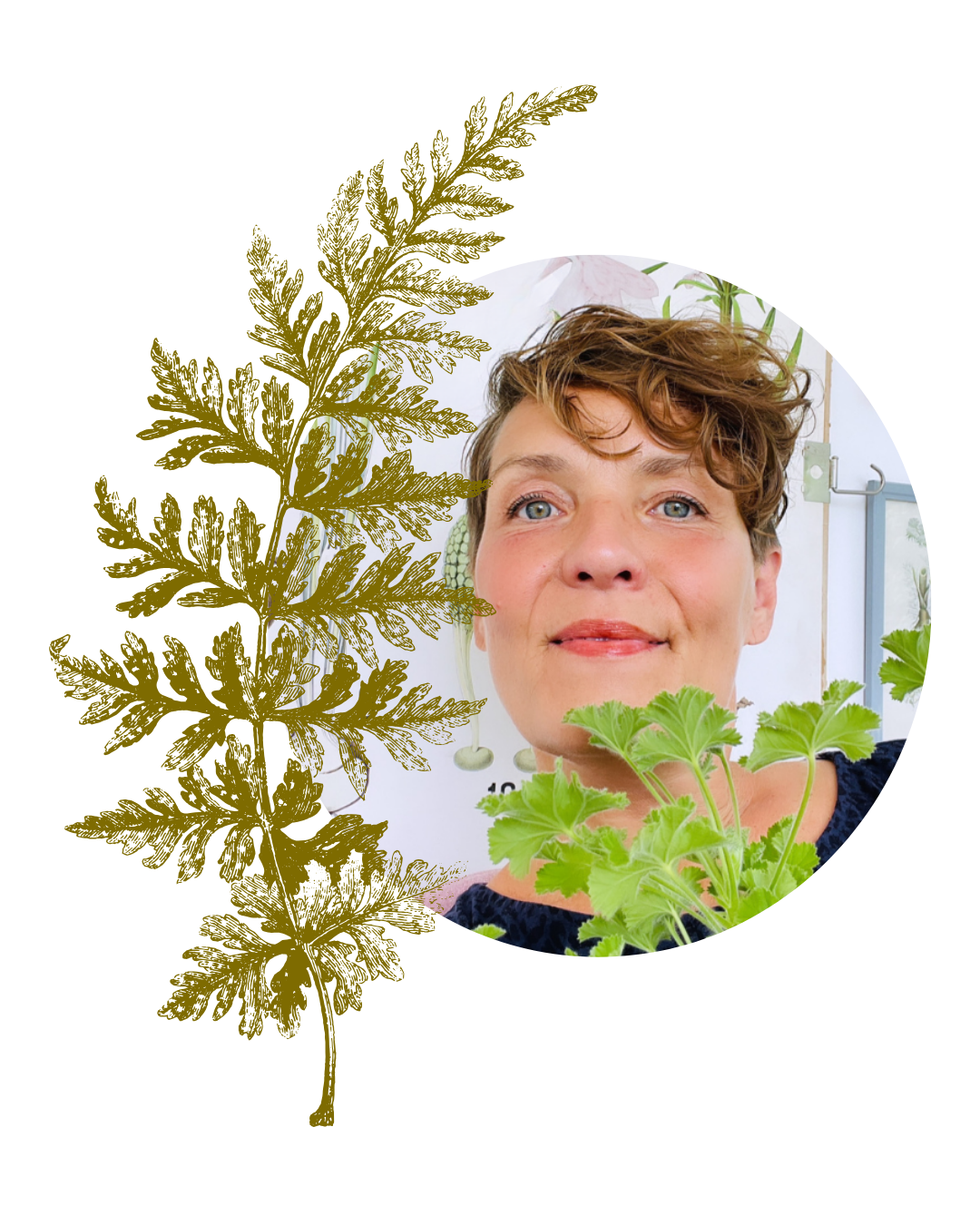
Hi Im Mette
I am a Danish textile designer specializing in botanical printing and ecoprinting.
Through years of research into plant-based colors and natural dyes, I have developed techniques that enable clear, detailed botanical prints to emerge on textile fibers.
My work is a close collaboration with nature, driven by a deep fascination with natural colors and shapes — where tradition and experimentation meet to expand the possibilities of ecoprinting.
I have extensive experience in teaching and mentoring, and have worked as a Senior Lecturer in textile design at design schools and university colleges in Denmark and England.
I have also served as an external examiner in textile design across Denmark, and have led numerous private courses in ecoprinting and botanical printing.
In addition, I have worked with young people with special needs, introducing them to creative textile processes.
I’d be happy to support you throughout the journey
Ready to take the next step in your Botanical Printing Journey?
FAQ
-
Not at all. Ecoprint Next Level is designed to support you whether you are just beginning or already have experience with ecoprinting — the “next level” simply means that you are guided more directly to clear, reliable results.
Inside the course, you gain access to a comprehensive body of work — a carefully developed library of techniques, processes and material knowledge built through years of practice and research into plant-based colors.
If you are new to ecoprinting, this gives you a clear and structured foundation for creating crispy clear ecoprints, so your results become consistent rather than unpredictable.
If you already have experience, the course offers depth, variation and more experimental approaches — allowing you to refine your process and develop your own signature style within botanical printing.
-
Absolutely.
Winter is often an ideal time to begin, as it allows for more focused study and a deeper understanding of the process.
Early in the course, you will learn techniques that are especially suited for working in colder months, so you can start creating ecoprints right away.
At the same time, you will build a foundation that allows you to work with botanical printing all year round — regardless of season or location.
-
Many students begin to see a clear difference in their prints early in the process, as the course focuses on the key principles that create clarity and color.
As you continue working through the material, your results become more consistent and refined over time.
-
You’ll have full access to all video lessons for 3 years, covering the fundamental techniques and processes.
In addition, you’ll receive more than 150 pages of downloadable guides, instructions and tutorials — yours to keep — creating a personal library of resources you can return to anytime as you continue your work with botanical printing.
-
You don’t need much to begin with.
The course includes guidance on materials and tools, and many of the techniques can be explored with simple, accessible supplies.
You can start where you are, and gradually build your materials and practice as you go.
-
Yes definitely!
The course is in English, and most of the course is taught visually, with the camera focused on my hands, so you can clearly follow each step of the process.
The written guides are in English, but they can easily be translated into your own language using online tools — allowing you to work through the material at your own pace.
-
You’ll work with both cellulose fibers and protein fibers (such as silk).
Understanding the differences between these materials is essential, as they behave very differently in the process — and produce distinct results.
Throughout the course, you’ll gain a solid understanding of both approaches, so you know how to work with each material with clarity.
-
You’re always welcome to reach out for support along the way.
I recommend going through the course material thoroughly first, as many questions are already answered within the lessons and guides.
If you still can’t find what you need, you’re very welcome to contact me — I always do my best to respond as quickly as possible.
If you’re located in a different time zone, there may occasionally be a short delay.
-
No — all modules are pre-recorded, allowing you to learn at your own pace and revisit the material whenever you need.
Some modules include both video lessons and written guides, while others are PDF-based. All downloadable materials are yours to keep, so you can return to them anytime.