
The transformative nature of madder and why madder creates magic in your ecoprints!
Some plant dyes quietly provide color. Madder does much more than that.
As a part of my research on ecoprinting and botanical printing, I've been exploring madder root as a background dye, and it has quickly become one of the most fascinating plant dyes I have ever worked with.
Part of what makes madder so exciting is its color palette. Unlike many plant dyes, which often produce yellows, golds and browns, madder can create an astonishing range of colors - from warm powder rose and glowing oranges to deep reds, burgundy tones and even purplish hues.
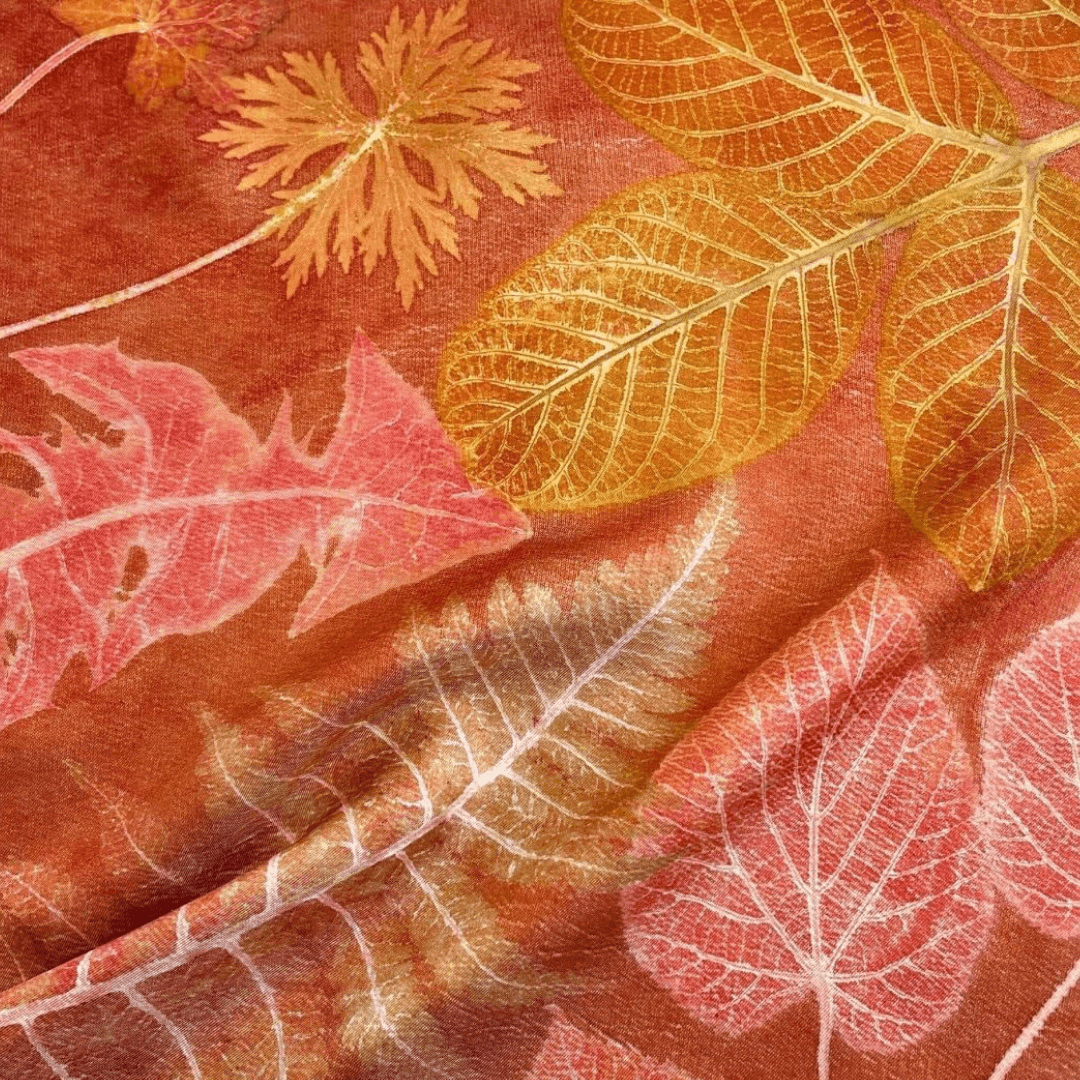
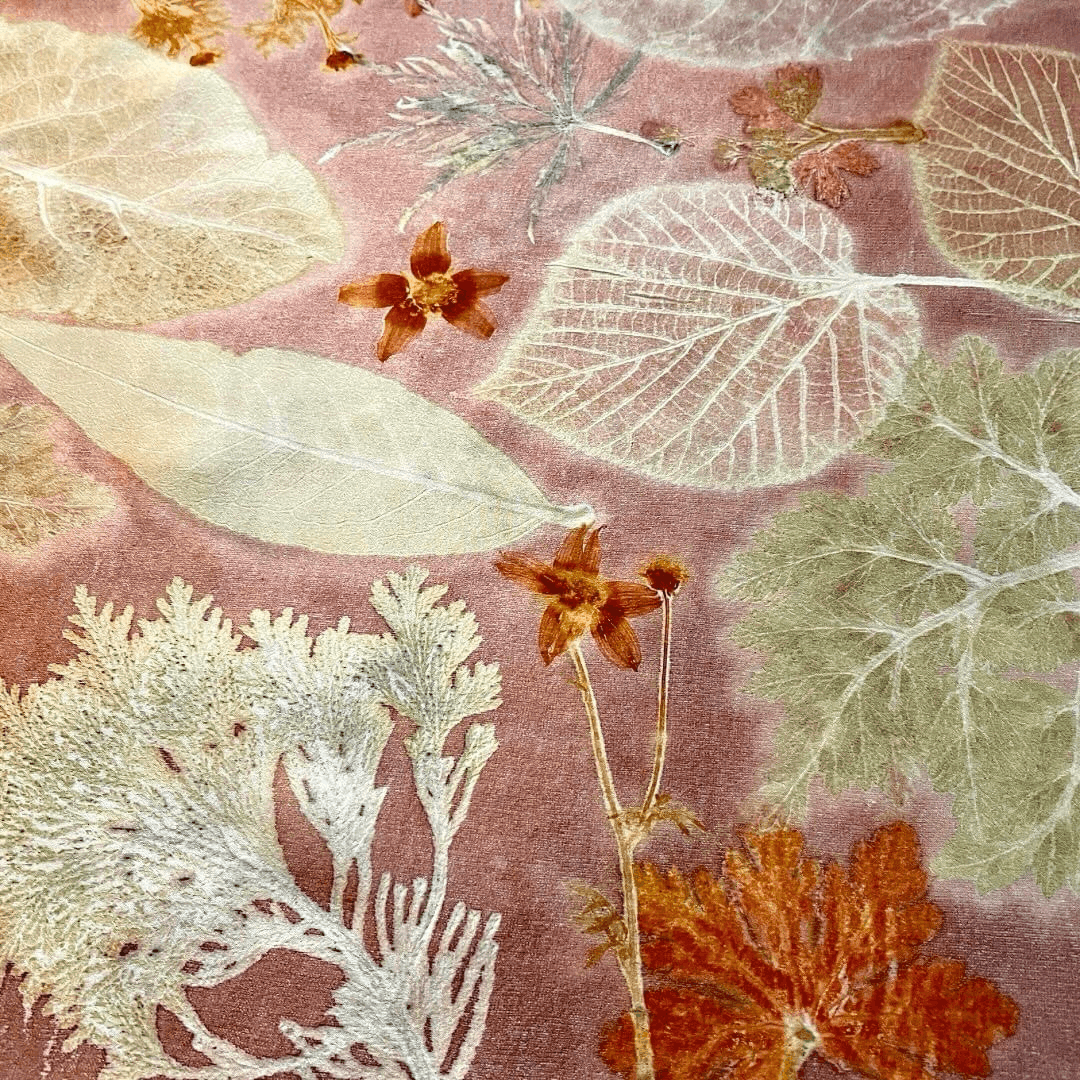
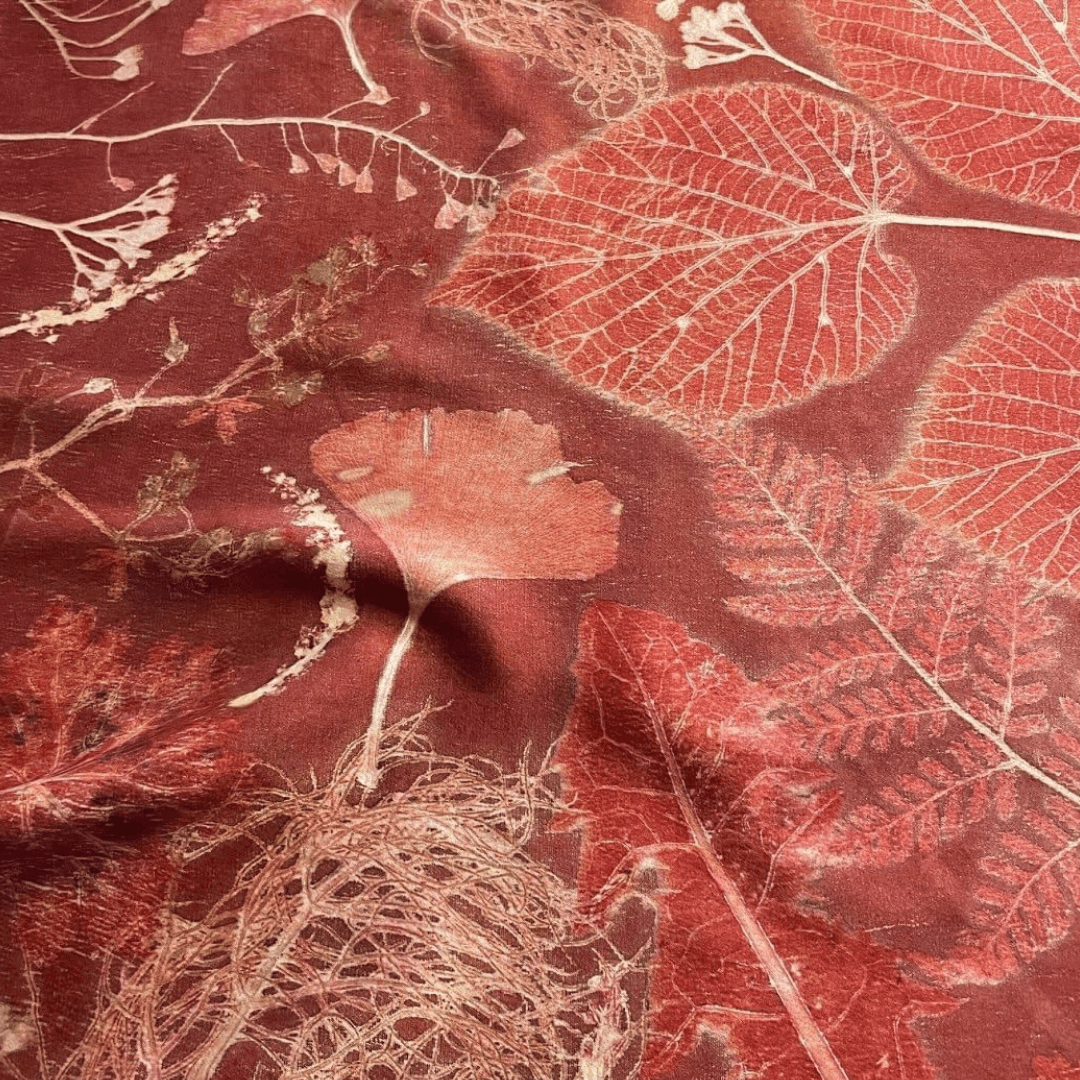
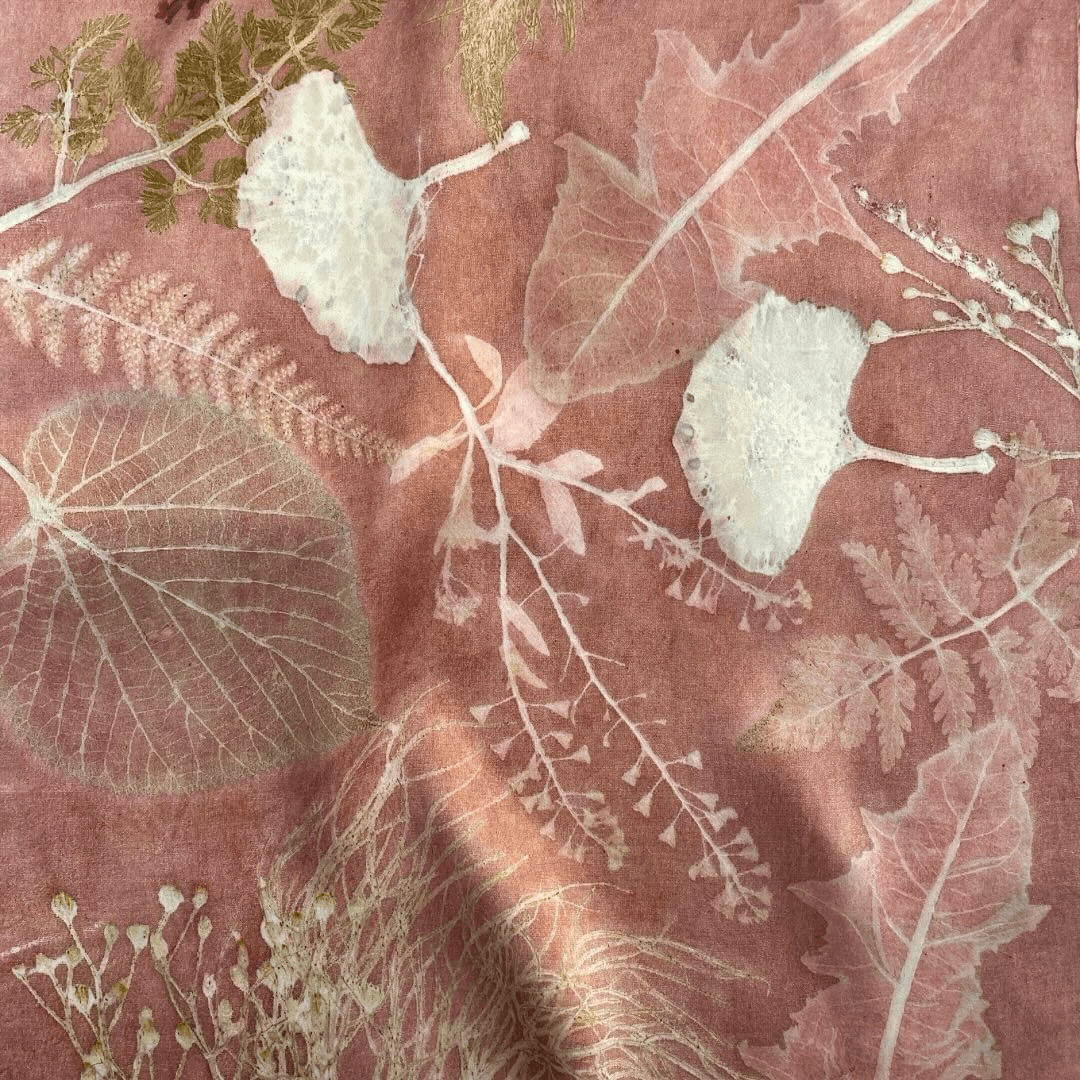
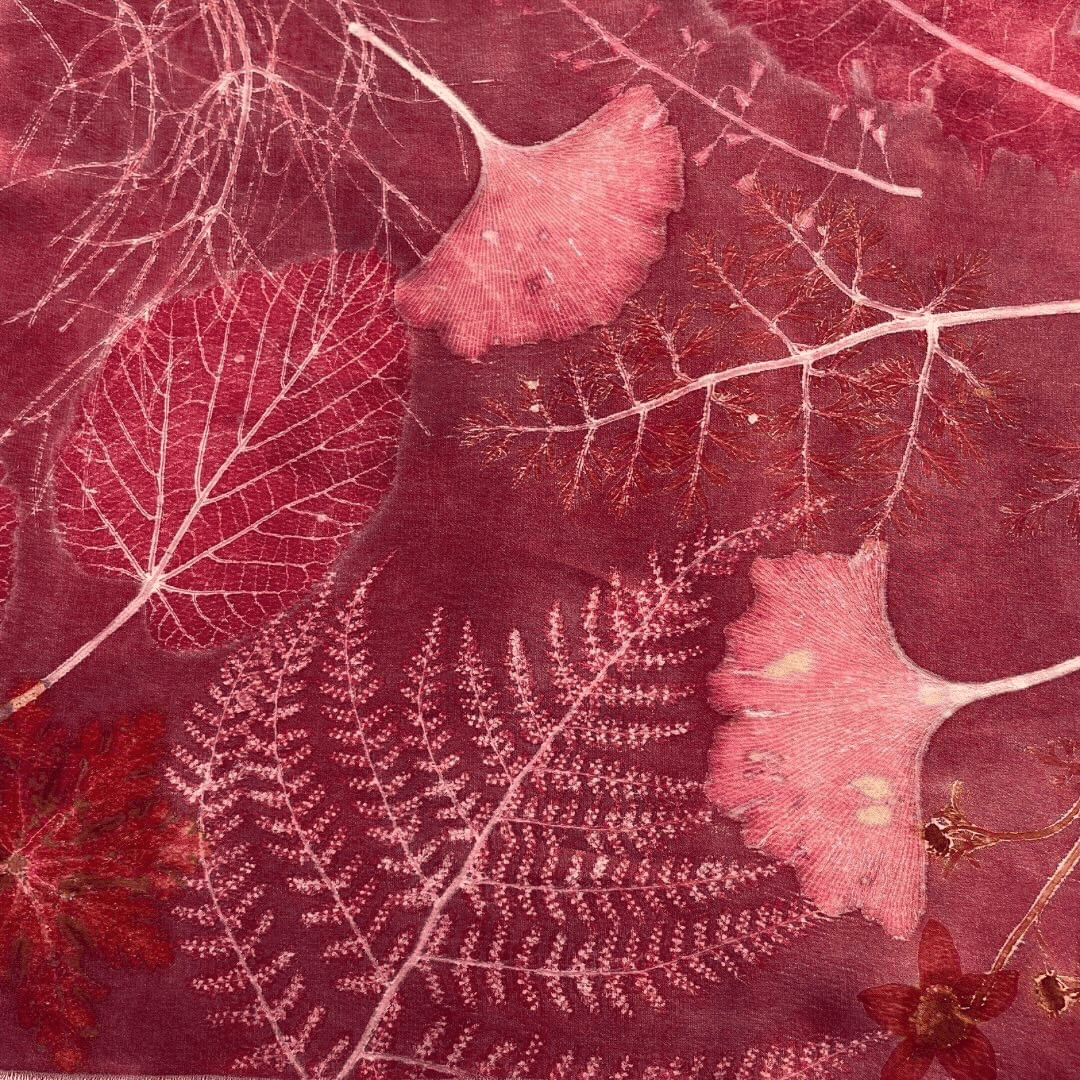
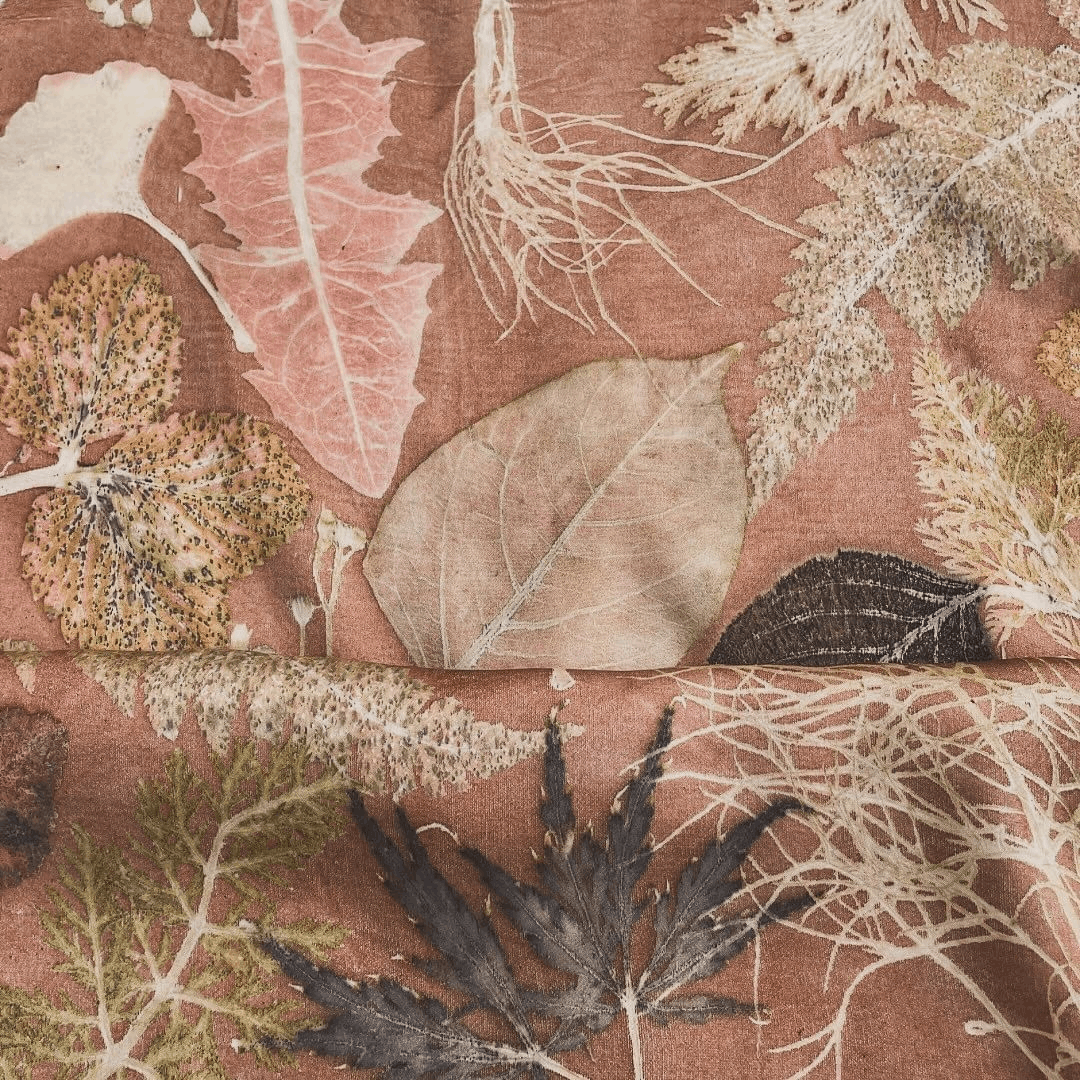
But the real magic begins when madder meets the plants.
When madder migrates through the leaves
One of the qualities that fascinates me most is madder's ability to migrate through plant material during the printing process.
As heat, moisture and pressure are applied, the color can move through leaves and flowers, creating soft tone-on-tone effects and subtle color transitions, that are difficult to achieve with many other natural dyes.
One theory as to why madder has such a remarkable ability to migrate through plant material is related to the size of its dye molecules.
The primary color compounds found in madder root, particularly alizarin and purpurin, are relatively small molecules compared to many of the larger tannin and pigment complexes found in other plant dyes. Alizarin and purpurin are small anthraquinone molecules, whereas many tannins are much larger polyphenolic compounds with significantly higher molecular weights.
Because these dye molecules are relatively small, they may be able to penetrate the surface of the leaves more readily than larger pigment or tannin complexes. During steaming, the leaves become warm and moist. Their cell walls swell, and the waxy cuticle becomes more permeable. Combined with firm pressure and good contact between the plants, the target fabric and the dye blanket, this can allow madder dye to migrate through many types of leaves.
The result is often beautiful tone-on-tone impressions, where the plant material takes on the background color in varying shades, creating subtle contrasts that depend on the pigments and tannins naturally present in the leaves and flowers.
Every plant responds differently
One of the most intriguing aspects of working with madder is, that the dye rarely behaves the same way from one plant to another.
In my experiments, I've often found that non-printers and light-printers become some of the most interesting plants in the bundle. Because madder can migrate through the plant material, delicate leaves and flowers often create subtle tone-on-tone effects, soft silhouettes and unexpected color transitions.
Some plants seem to allow the color to pass through easily, while others modify it in surprising ways. Plants with acidic properties, for example, can sometimes create entirely different visual effects than neighbouring plants in the same print.
What fascinates me is, that the final colors emerge through the interaction between the dye and the plant itself. The same background color can produce remarkably different results depending on the chemistry, structure and permeability of the plant material.
This is one of the reasons I never become bored with madder. Even familiar plants can reveal completely new qualities when combined with it.
A dye with thousands of years of history
Madder root (Rubia tinctorum) has been used as a textile dye for thousands of years. Historical evidence of its use can be found across Europe, Asia, North Africa and the Middle East, where its rich red hues were prized for textiles, decorative arts and traditional crafts.
For centuries, it was one of the most important red dyes available and was valued for both its beauty and durability. And even today it continues to captivate natural dyers, ecoprinters and textile artists around the world.
Why I keep returning to madder
What began as an extensive research project for a new section in my online course, soon evolved into a deeper dialogue with madder.
The more I work with madder, the more I appreciate its complexity.
It rewards observation.
It rewards experimentation.
And perhaps most importantly, it reminds me that ecoprinting is not simply about transferring the shape of a leaf onto fabric.
It is about creating a dialogue between plants, fibres and the natural colors.
Madder seems particularly gifted at facilitating that conversation.
Every bundle contains an element of exploration.
Every unrolling reveals something unexpected.
And every now and then, madder gifts me a color combination or a print that I could never have predicted beforehand.
Those are the moments that keep me coming back.
And although I have spent months exploring its possibilities, I still feel as though I have only scratched the surface of, what this remarkable dye plant has to offer.