
The special qualities of spring leaves in ecoprinting
You may have noticed that ecoprints and botanical prints look very different throughout the seasons.
In spring, plants typically contain much more water than tannin and pigment. At this stage they are not yet fully developed and usually have thinner wax layers, softer surface tissue, more flexible cell walls, and a much higher water content than mature summer or autumn leaves.
Spring leaf permeability
This increased leaf permeability has a major advantage in ecoprinting: liquids and dyes can penetrate the leaves much more easily. When working with background dyes that are able to migrate through the plant material, this often results in beautiful tone-on-tone prints where the plant impressions blend seamlessly into the background.
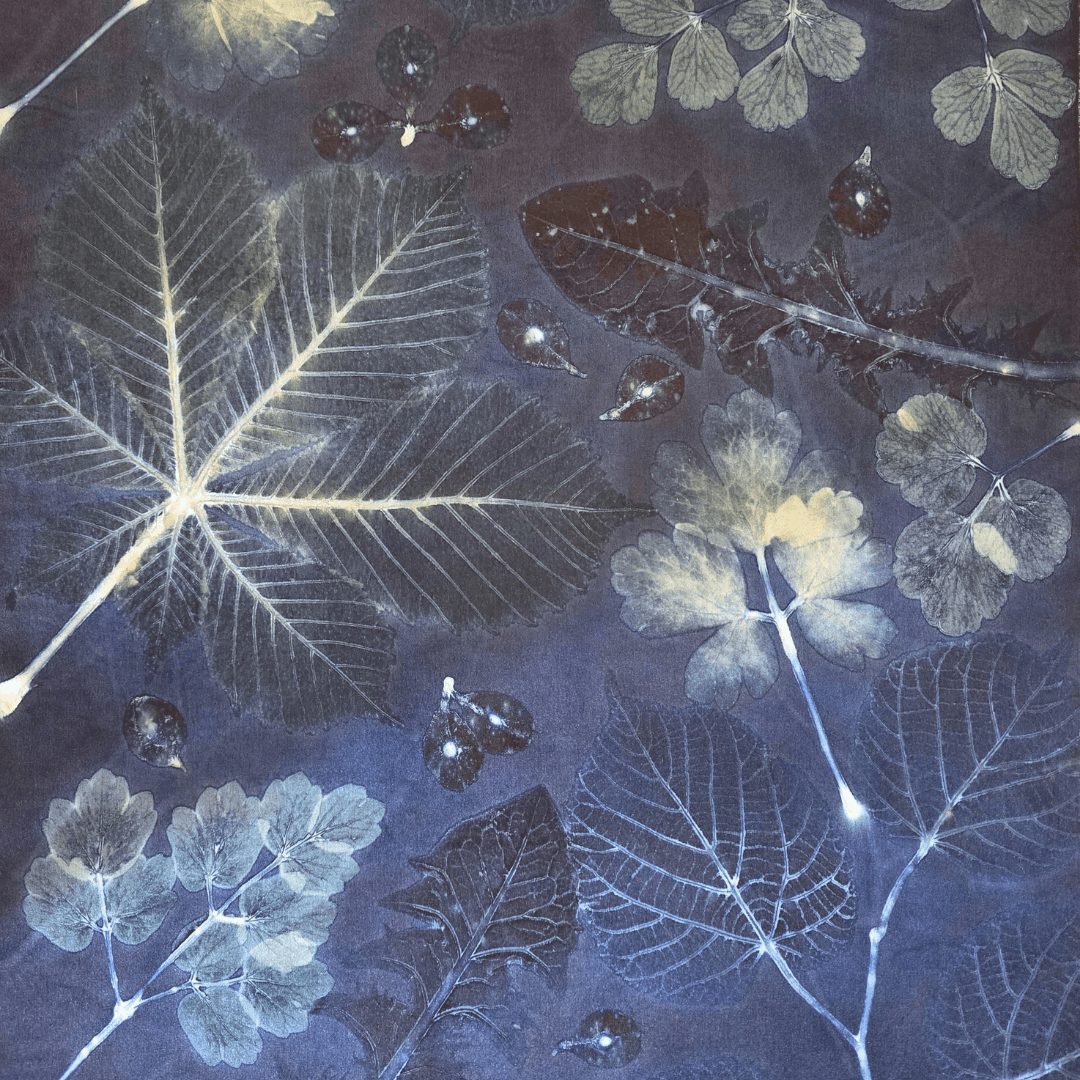
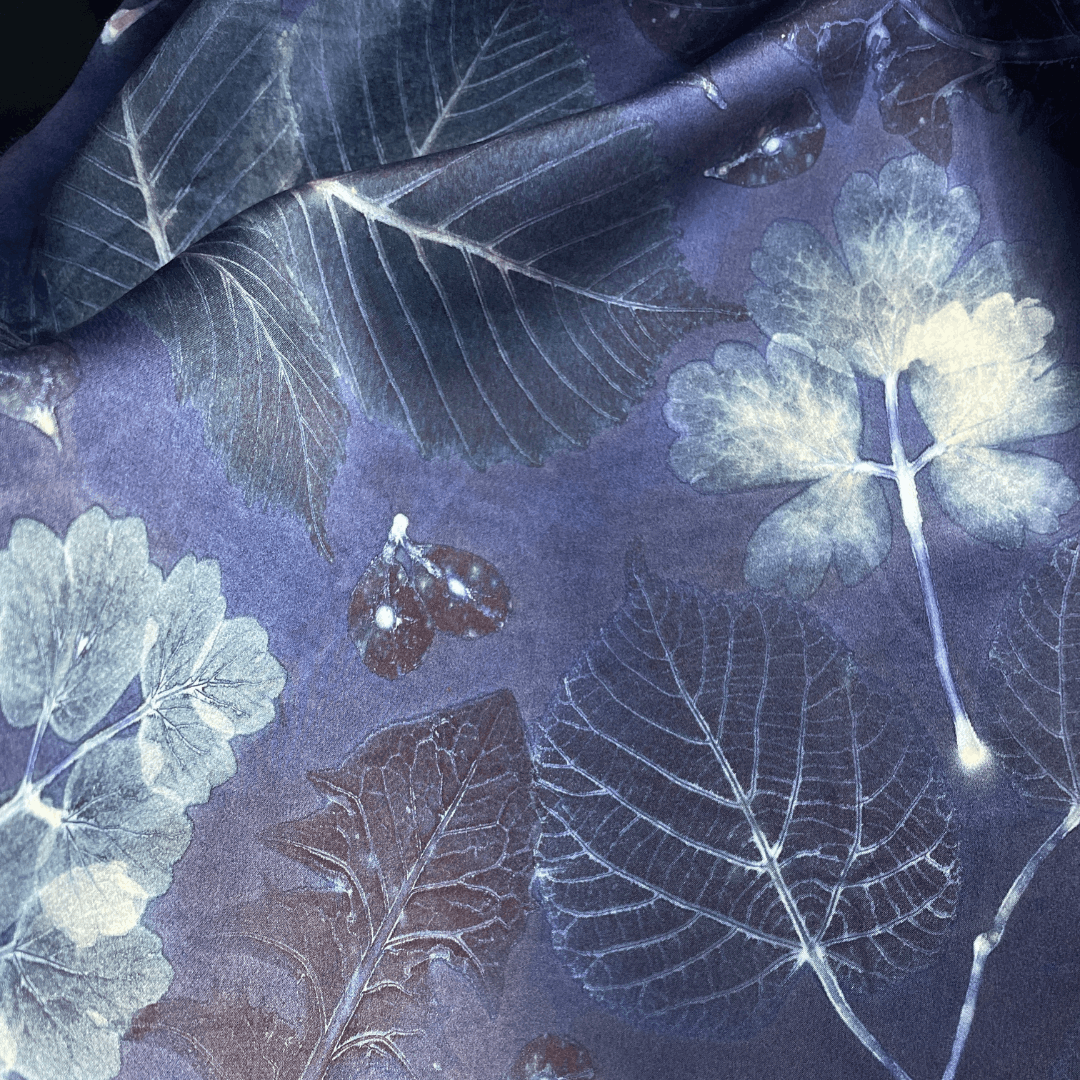
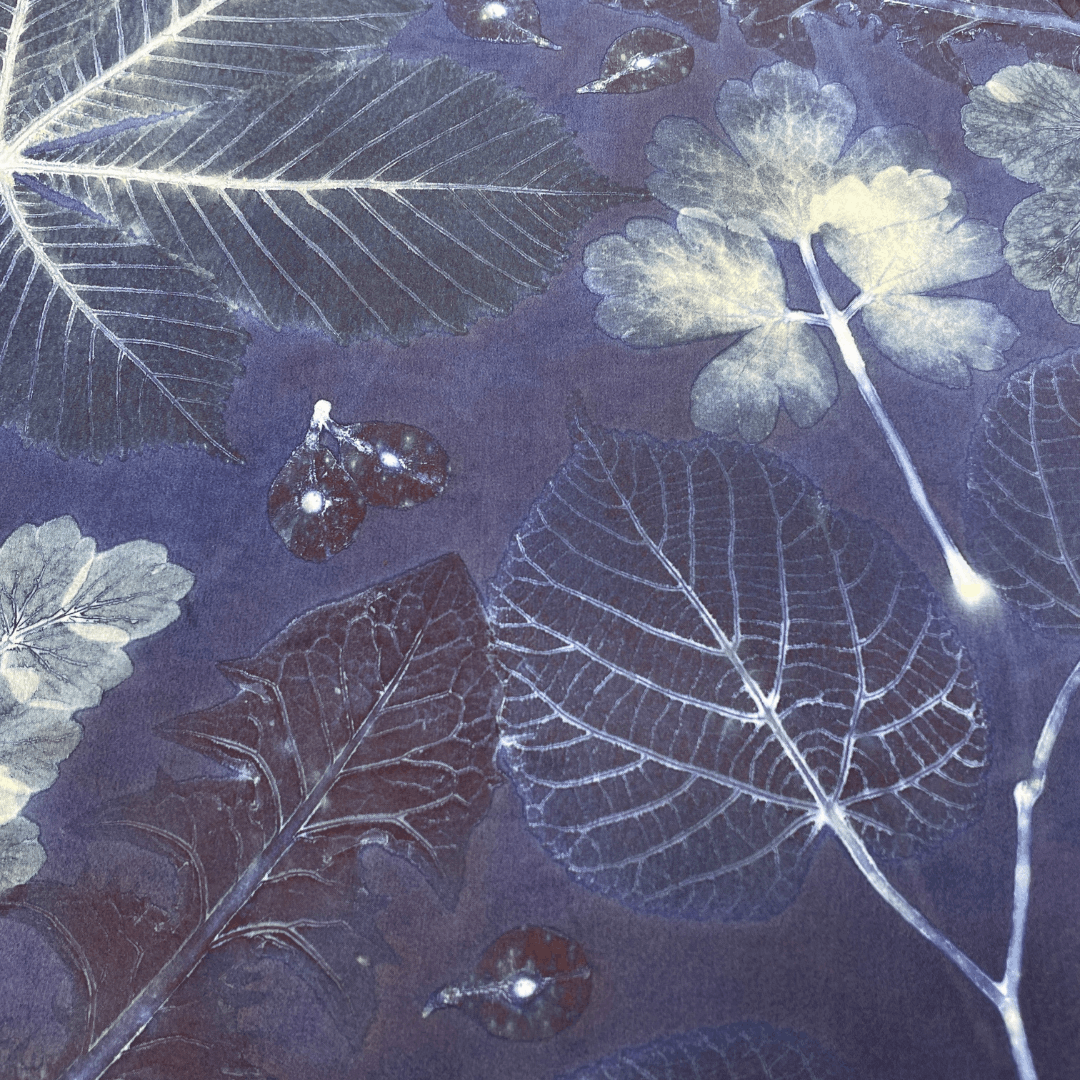
Tone-on-tone prints
In the spring print shown here, non- and light-printers such as linden, dandelion and elm samara seeds create delicate darker silhouettes. Although light-printers and non-printers are often associated with delicate, lighter impressions, this print tells a different story. Here, the high permeability of the plants allows a remarkable amount of color to migrate through the leaf tissue and bind to the fabric. The result is a deep, atmospheric impression that appears only slightly lighter than the surrounding background color, shaped by the interaction between the dye and the plant's own natural compounds.
This is one of the reasons I return to light-printers and non-printers again and again. Despite containing little or no color themselves, they can create some of the most unexpected, dramatic and beautiful effects in botanical printing. I often feel they are underestimated, simply because their beauty reveals itself in a different way than that of traditional color printers.
The color-printer chestnut behaves with its pigments merging into the background dye to create a deep bluish tone with a greenish cast while still preserving the beautiful leaf structure that chestnut is known for. Learn more about the different printers in the article “A guide to ecoprint plants”
I've also been exploring plants with acidic properties, such as columbine, which can create soft, watercolor-like prints with an almost X-ray-like appearance. More recently, I've been working with columbine meadow-rue, which shares some of these qualities but produces more defined impressions.
Plants used in this print:
Chestnut
Dandelion
Elm samaras
Columbine
Linden
Columbine meadow-rue
This print was created on silk satin (82 g/m²) using a logwood background dye (Full mordant recipes, dye composition and printing details are included in my online course “Ecoprint Next Level”).
Gathering spring ephemera
Spring is also the perfect time to gather and press plants and seed heads that disappear in the blink of an eye, such as elm samara seeds. Over time, this creates a rich botanical archive filled with plants of different textures, structures and printing characteristics, opening up endless possibilities for future ecoprints and seasonal botanical prints.
Gathering and pressing throughout the seasons has gradually become a central part of my practice — not only as a way of preserving plants, but also as a way of understanding how each season brings its own colors, structures, and printing qualities. This ongoing exploration is something I continue to share inside my online course, where I document my latest methods, techniques, and discoveries as they evolve through the seasons.