
The beauty of seeds and seed heads in ecoprinting and botanical printing
For me, a large part of collecting and pressing plants is about preserving the different stages of a plant’s life cycle and saving them for later use. Working this way adds a unique richness and diversity to my ecoprinting and botanical printing practice.
But why use seeds and seed heads in ecoprinting and botanical printing at all? And which ones work best?
In this blog post, I’ll introduce you to some of the seed heads I use most frequently in my own botanical prints and ecoprints: samara seeds, along with seed heads from shepherd’s purse, nipplewort, and narrow -leaved pepperwort.
Seeds — nature’s ingenious design
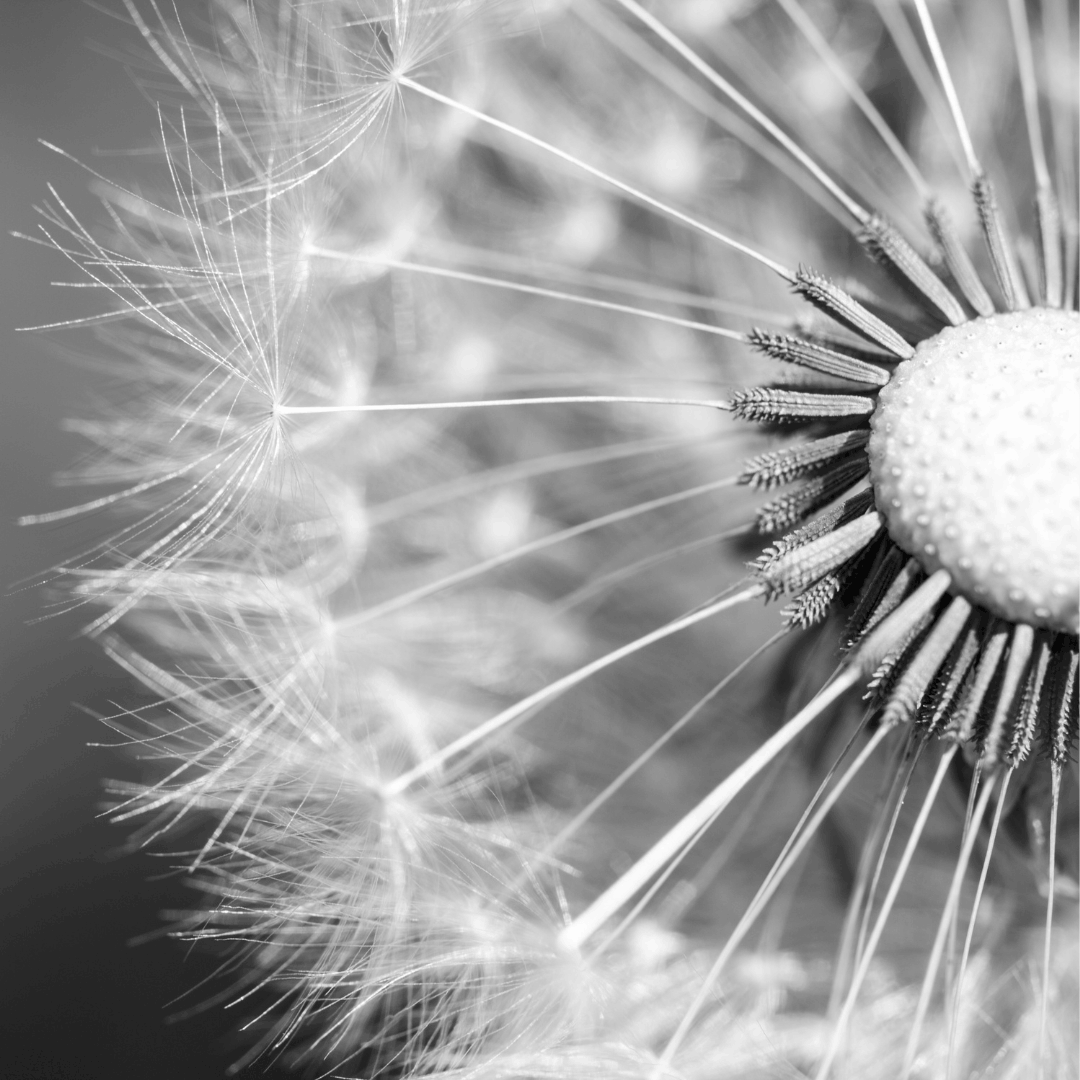
First of all: seeds are extraordinary.
They are among nature’s most brilliant creations. Not only are many seeds and seed heads visually stunning, they also embody nature’s intelligence in its purest form. Every seed contains the blueprint for new life — the complete coding of how a plant will eventually grow and unfold.
Many seeds are perfectly adapted for dispersal. Some drift effortlessly on the wind, while others are equipped with tiny hooks or structures that allow them to cling to fur or clothing and travel to new habitats.
Seeds can also remain dormant for remarkably long periods of time, waiting for the right combination of warmth and moisture to trigger germination. Many even contain their own built-in food reserve, nourishing the young plant during its earliest stages of growth.
Why use seed heads in ecoprinting and botanical printing?
In ecoprinting, seeds and seed heads are especially fascinating because of their forms and structures.
The seed heads that work best in botanical printing are usually those that are naturally flat or can be pressed flat. This helps ensure close contact between the target fabric, the plant material, and the dye blanket during bundling and steaming.
Most seeds and seed heads act as what we often call non-printers. They rarely release color, but instead create delicate graphic silhouettes and pale negative impressions within the print.
They are particularly beautiful printed with a background dye, where their shapes become clearly visible. I also love combining them with color printers — for example placing a seed head beneath a leaf — to create botanical prints and ecoprints with greater depth, texture, and complexity.
Samara seeds
Let’s begin with samara seeds, which I recently used in one of my latest botanical prints.
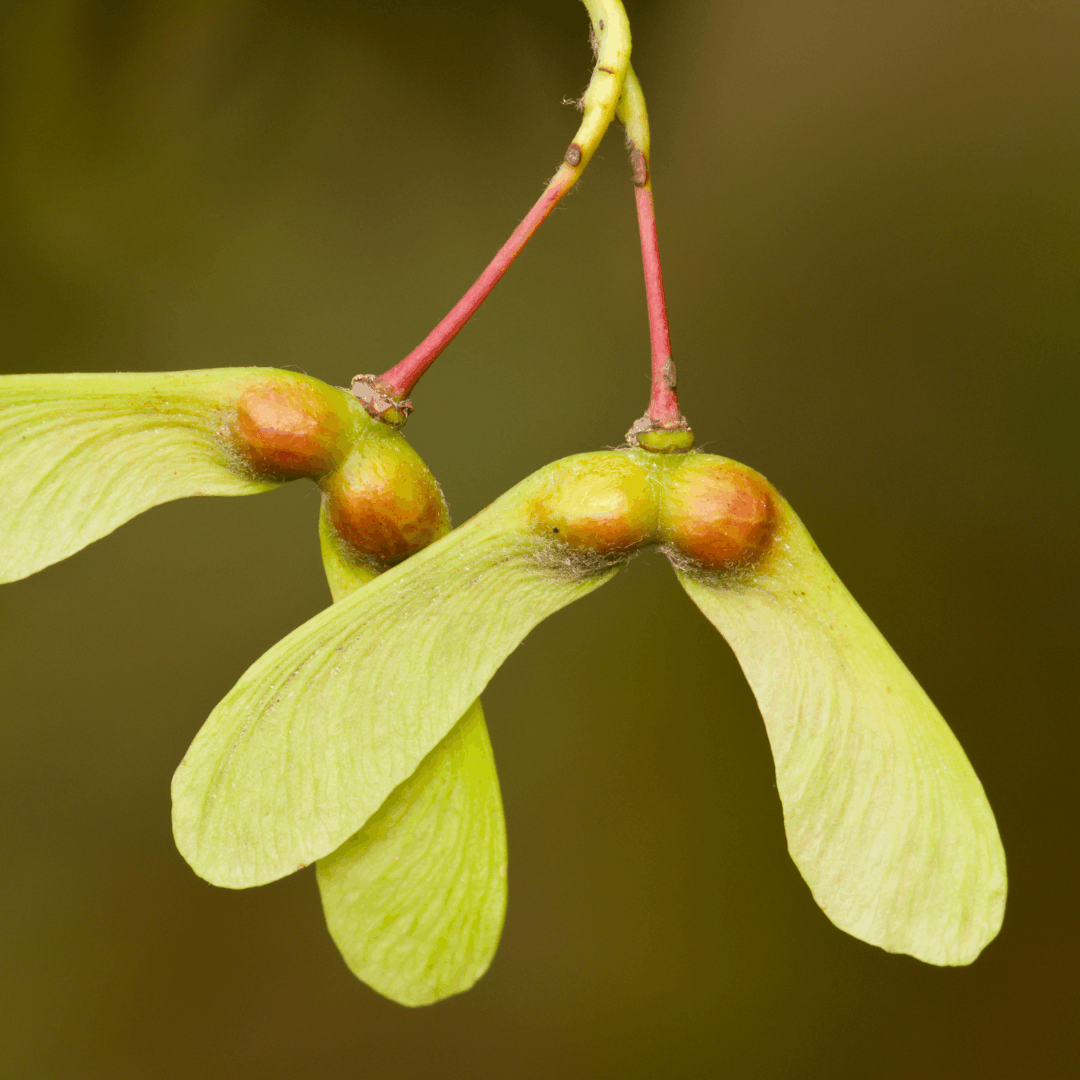
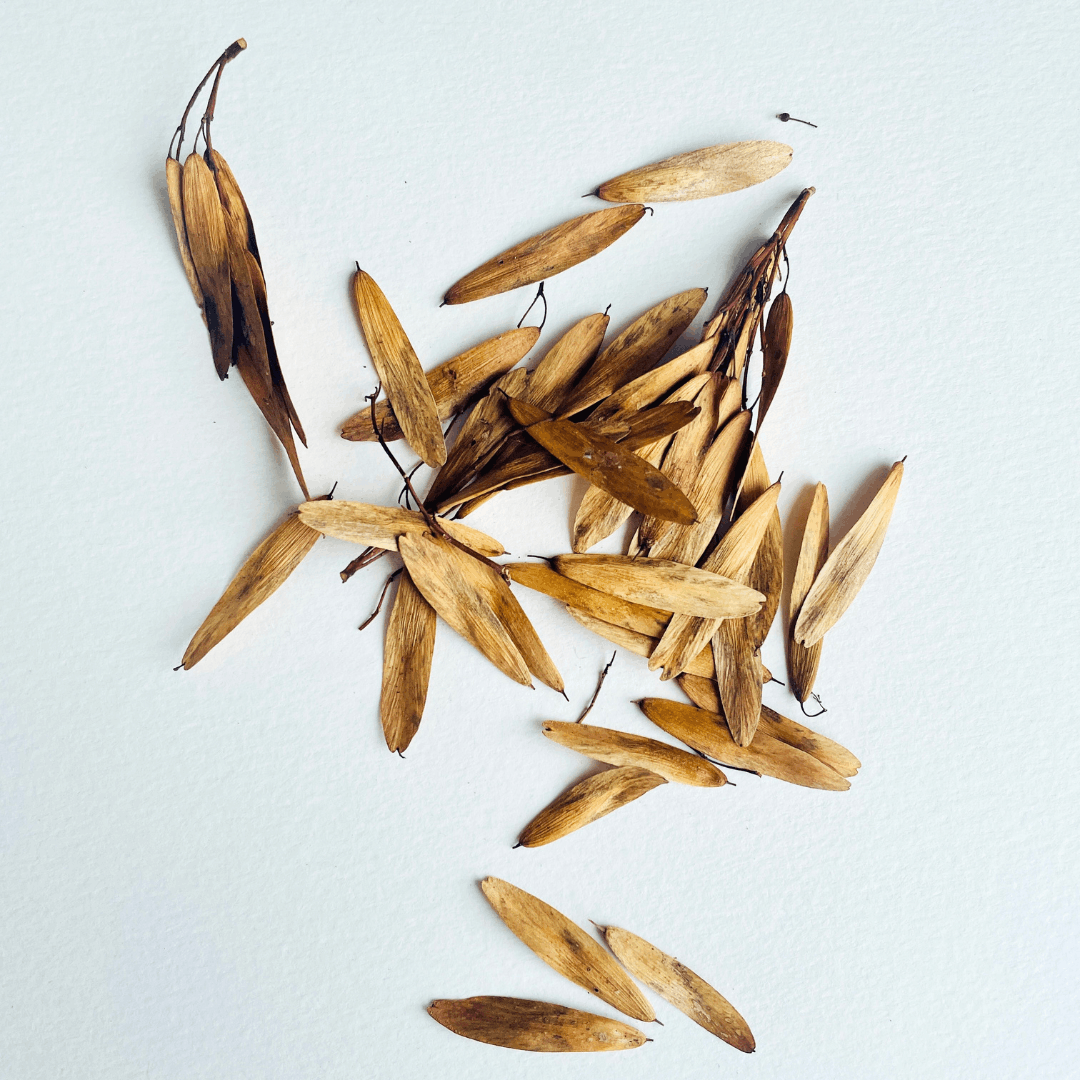
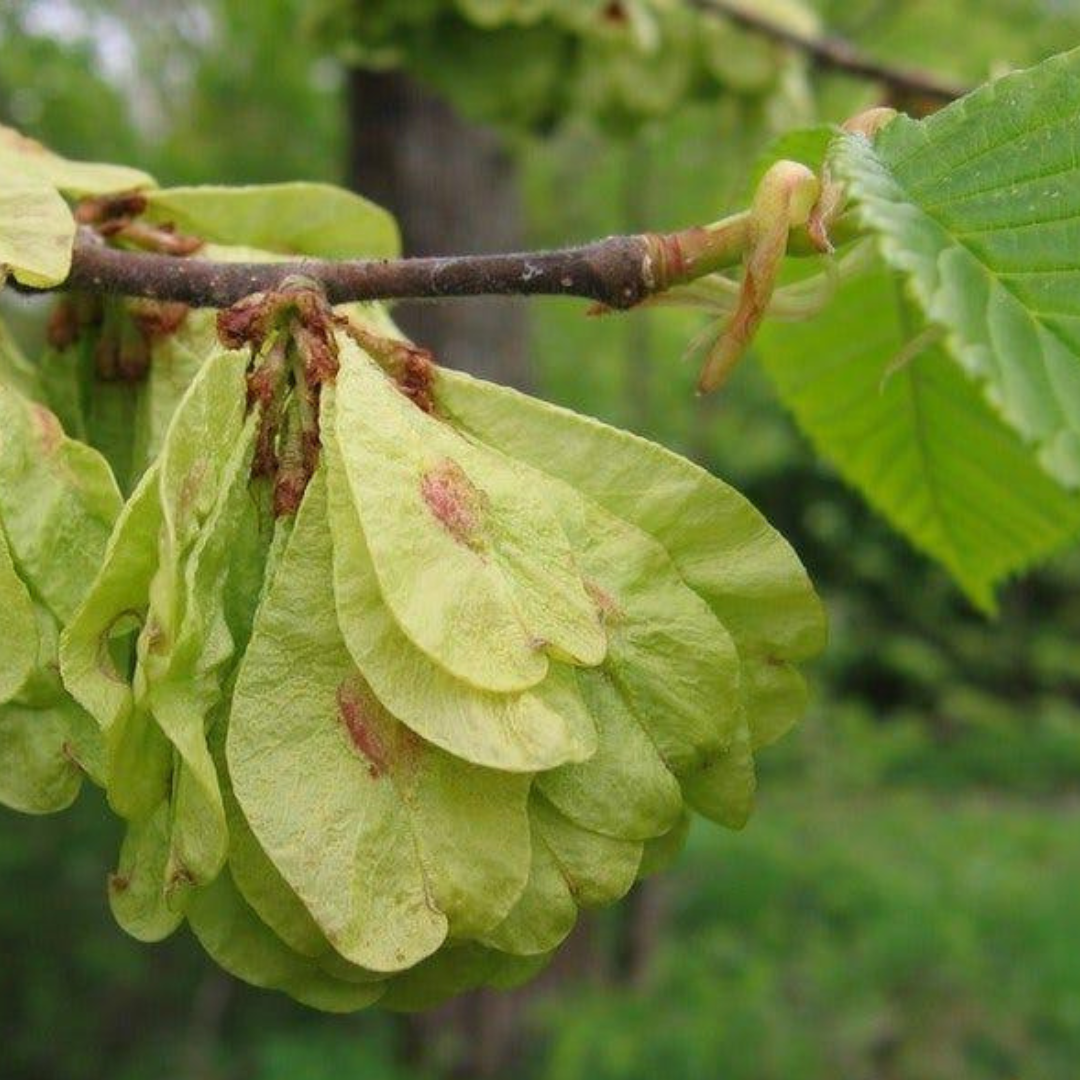
Elm samaras are the delicate winged seeds of elm trees (Ulmus). A samara is an ultra-light, papery seed structure evolved to travel with the wind. The seed itself sits at the centre, surrounded by a thin, translucent “wing” that allows it to spin and glide through the air.
I use elm samaras both fresh and pressed — and both produce beautiful results in ecoprinting and botanical printing.
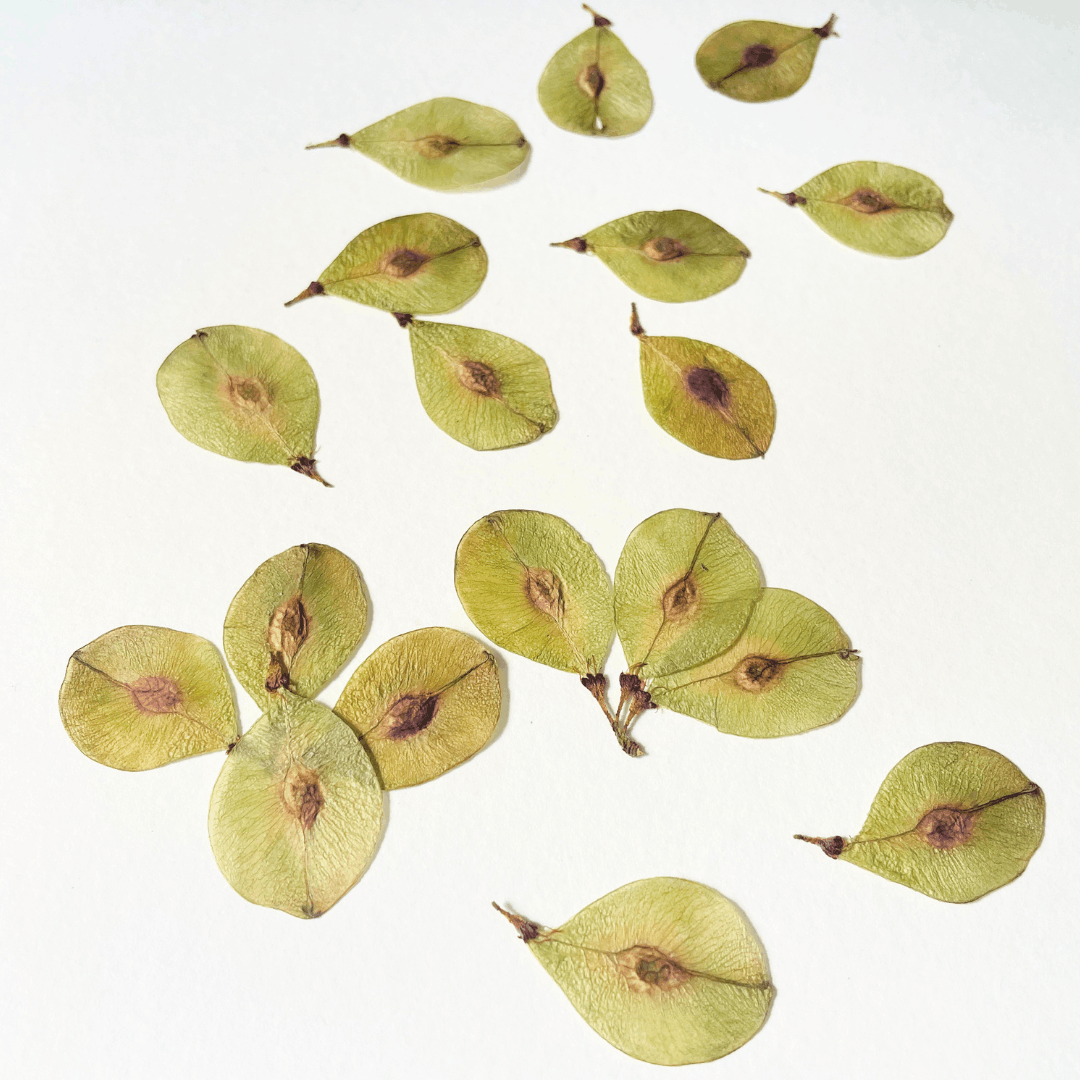
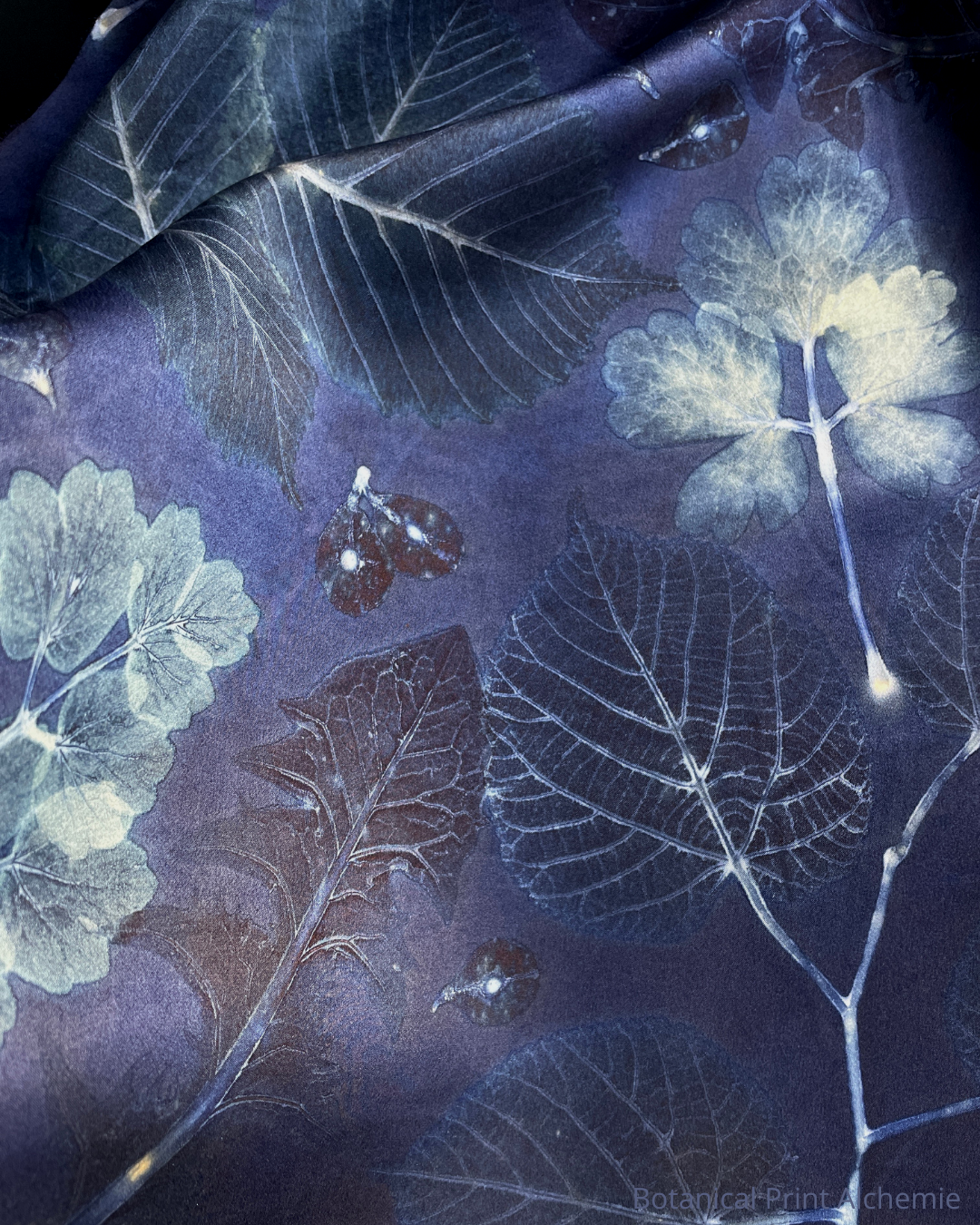
In the print above you see samara seeds used with a selection of spring plants, in a print with a logwood background dye (full mordant description, dye composition and printing details is featured in my online course). Fabric silk satin 82 gr/m2.
Because the wing surrounding the seed is so thin and delicate, the background color easily migrates through, resulting in a deep and dark imprint while the seed’s silhouette remains clearly defined.
Often, a tiny pale dot appears at the centre of the print, where the seed itself has been pressed firmly against the fabric during bundling, preventing the background dye from reaching that exact spot.
This subtle interplay between transparency, shape, and negative space is exactly what makes samara seeds so fascinating to work with in botanical printing and ecoprinting.
Shepherd’s purse
Shepherd’s purse (Capsella bursa-pastoris) belongs to the mustard family (Brassicaceae) and is one of the most widespread wild plants in the world. Originally native to Europe and parts of Asia, it has now naturalised across much of the globe — including North and South America, Australia, New Zealand, large parts of Africa, and most temperate regions worldwide.
You’ll often find shepherd’s purse growing along roadsides and pathways, in fields, gardens, disturbed soil, and urban spaces.
Its tiny heart-shaped seed pods are arranged rhythmically along slender stems, creating an elegant and highly recognisable structure. This delicate architecture is exactly what makes shepherd’s purse so compelling to work with in ecoprint and botanical printing.
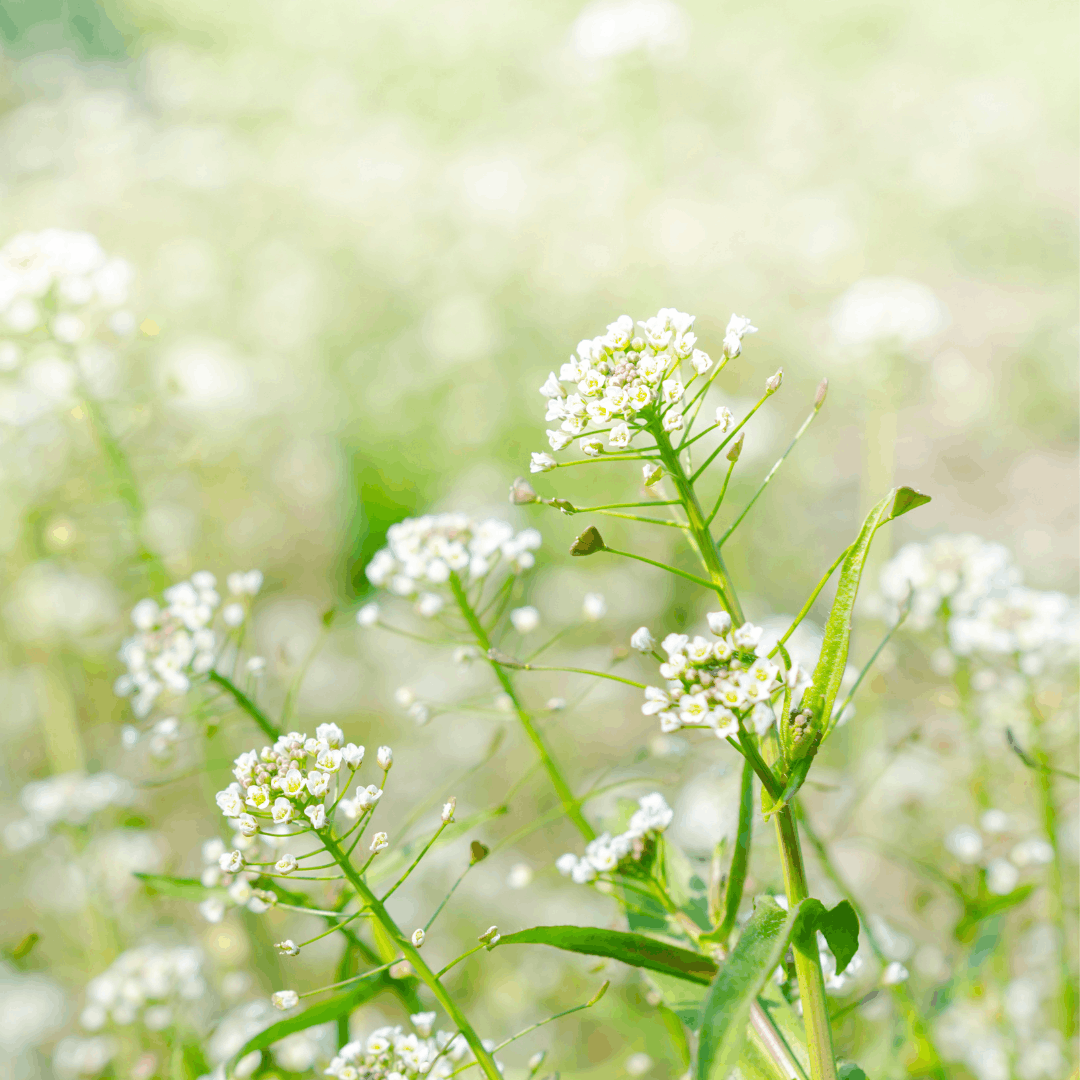
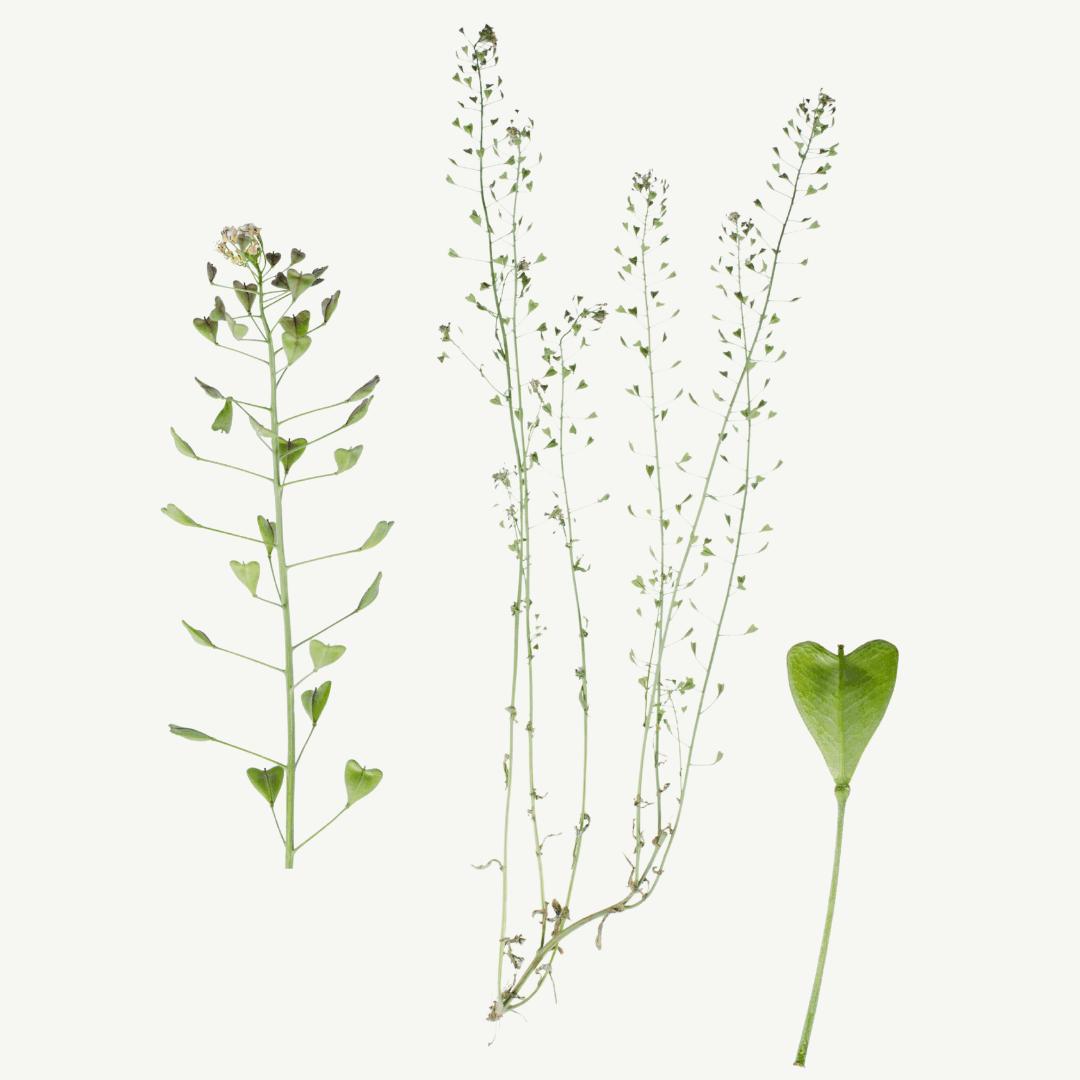
As a classic non-printer (read more about the different printers here), shepherd’s purse rarely contributes much color. Instead, it produces refined heart-shaped silhouettes and subtle negative impressions that bring movement, texture, and intricate detail into a print.
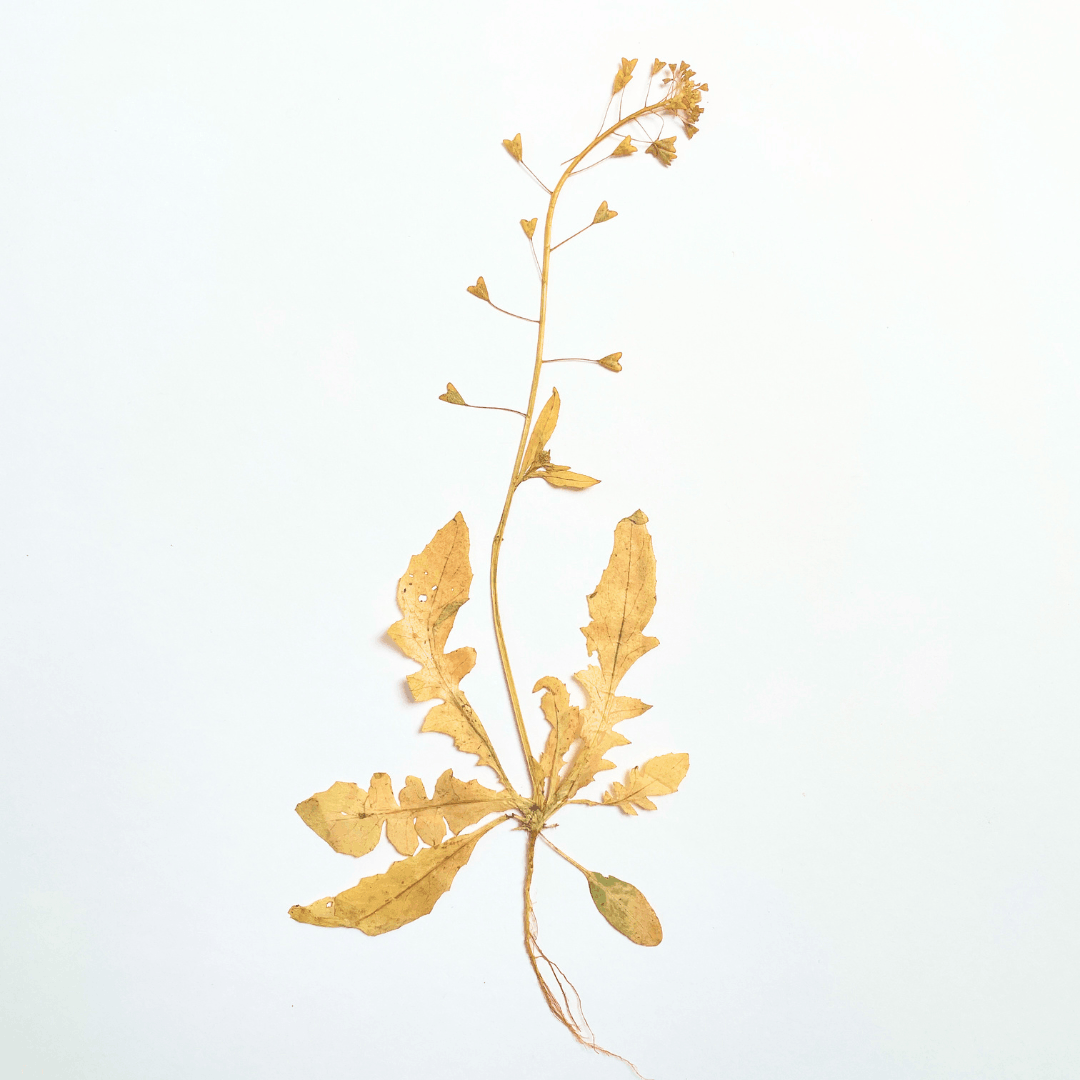
I especially love using it with a background dye in a negative print, where the plants appear as delicate white silhouettes, or layering it with more pigment-rich plants, allowing its fine graphic qualities to truly shine.
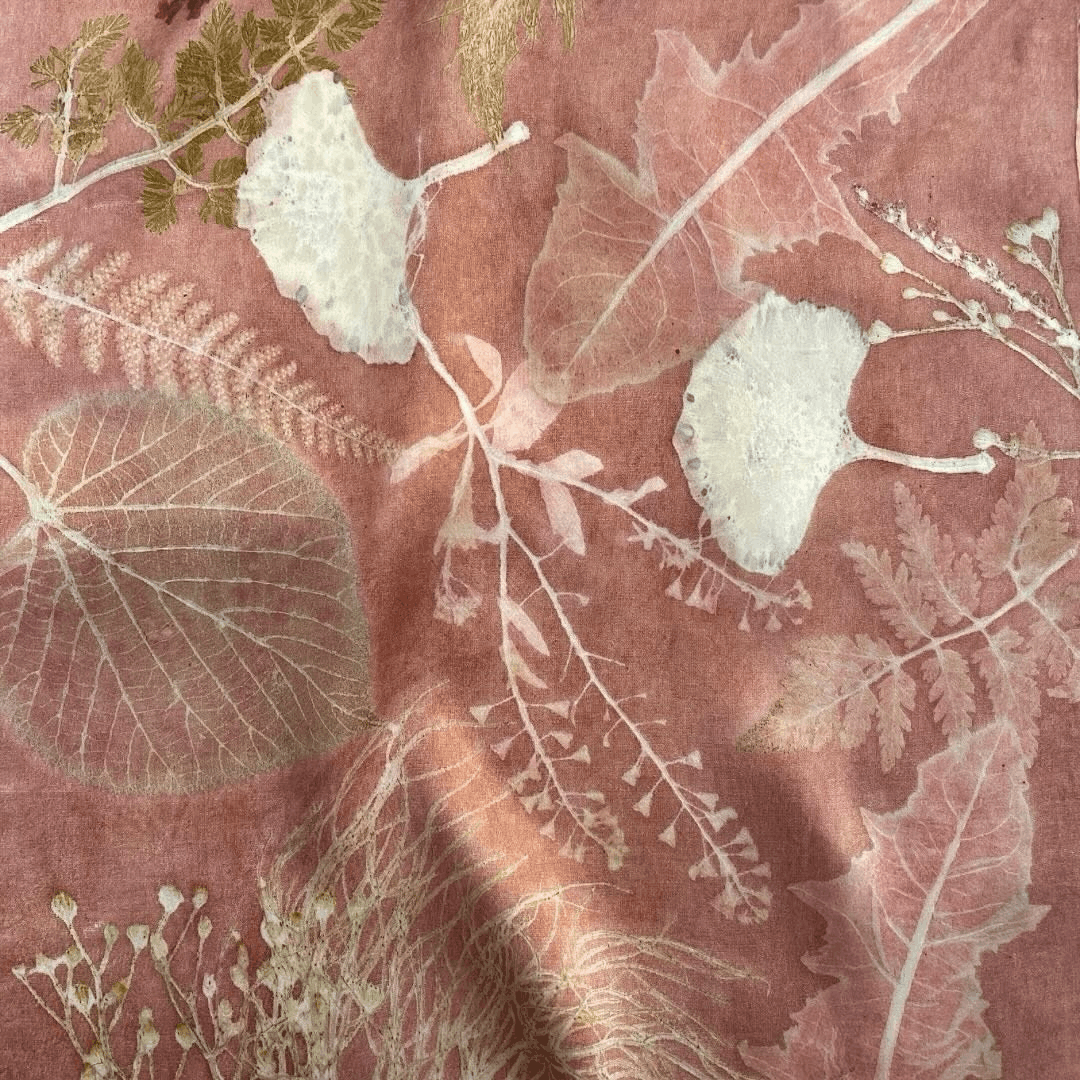
In the print above you see both sheperd’s purse seed heads and nipple wort seed heads used in a print with a light madder root background dye (full mordant description, dye composition and printing details is featured in my online course). Fabric: silk satin 82 gr/m2.
Nipplewort seed heads in ecoprinting
Nipplewort belongs to the daisy family (Asteraceae) and is a common wild plant found across much of Europe and Western Asia. Over time, it has also naturalised in North America, New Zealand, and parts of Australia.
It typically grows along hedgerows and woodland edges, as well as in gardens and parks where there is partial shade or softly filtered light.
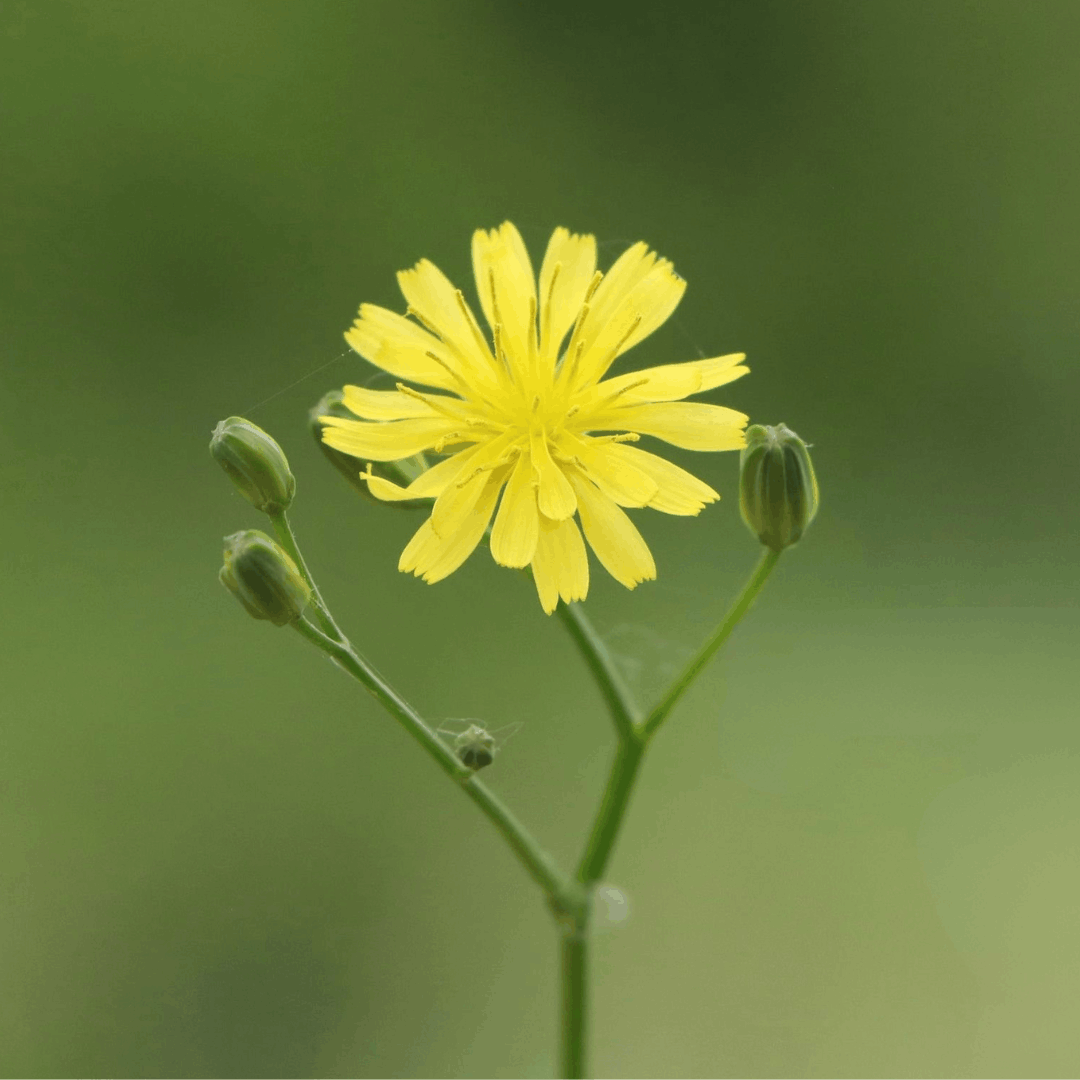
Nipplewort has an elegant, almost weightless growth habit, with fine branching stems and small yellow flowers that eventually transform into delicate seed heads.
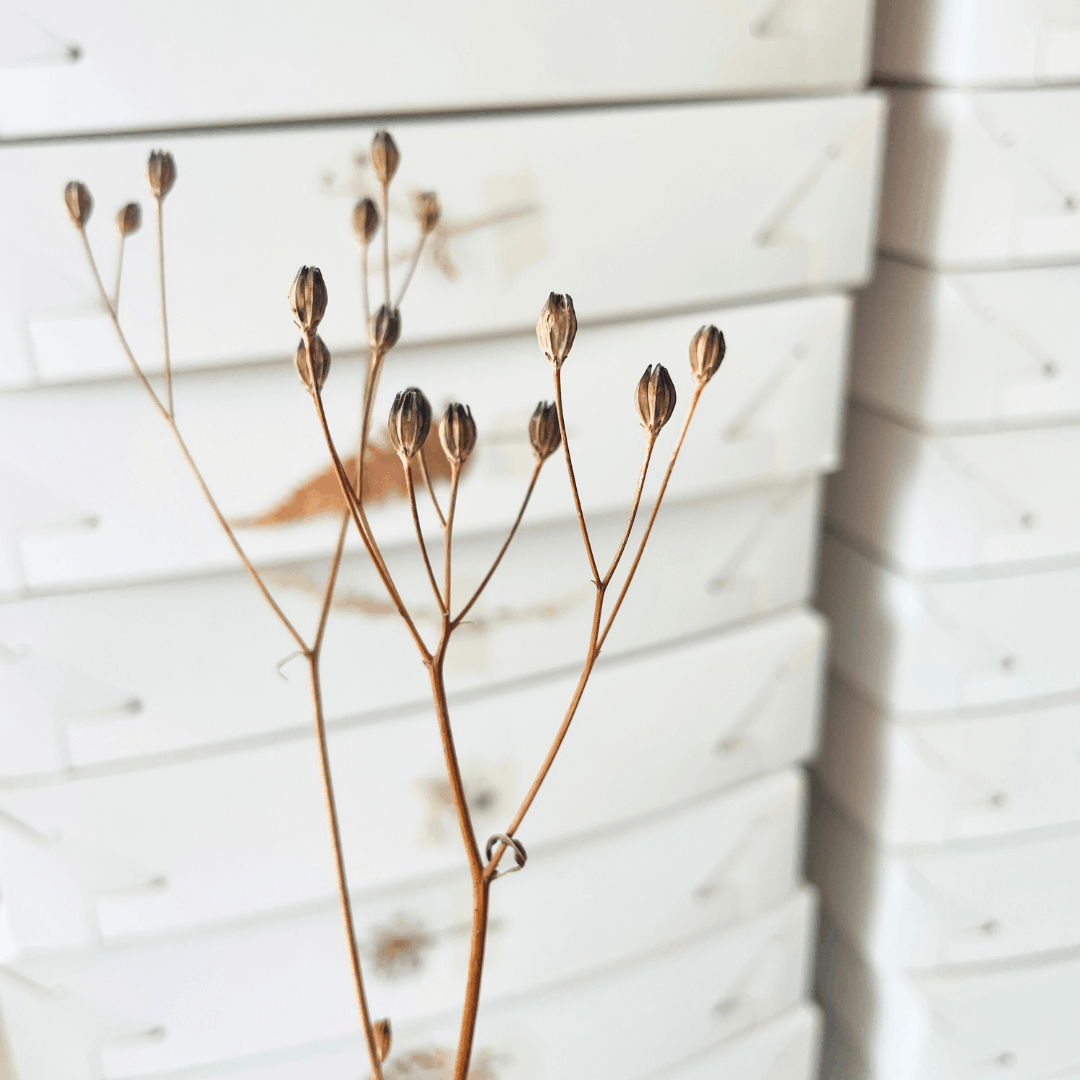
These are among the lightest and most ethereal seed heads I work with in ecoprint. The slender branching structures and tiny bead-like seeds leave soft, almost sketch-like traces across the fabric.
As a light-printer, nipplewort rarely contributes strong colour. Instead, it adds fine linear detail, transparency, and a subtle sense of movement that brings softness and depth to a botanical composition.
These qualities make nipplewort particularly valuable for creating delicate botanical prints with subtle details.
Narrow-leaved pepperwort seed heads
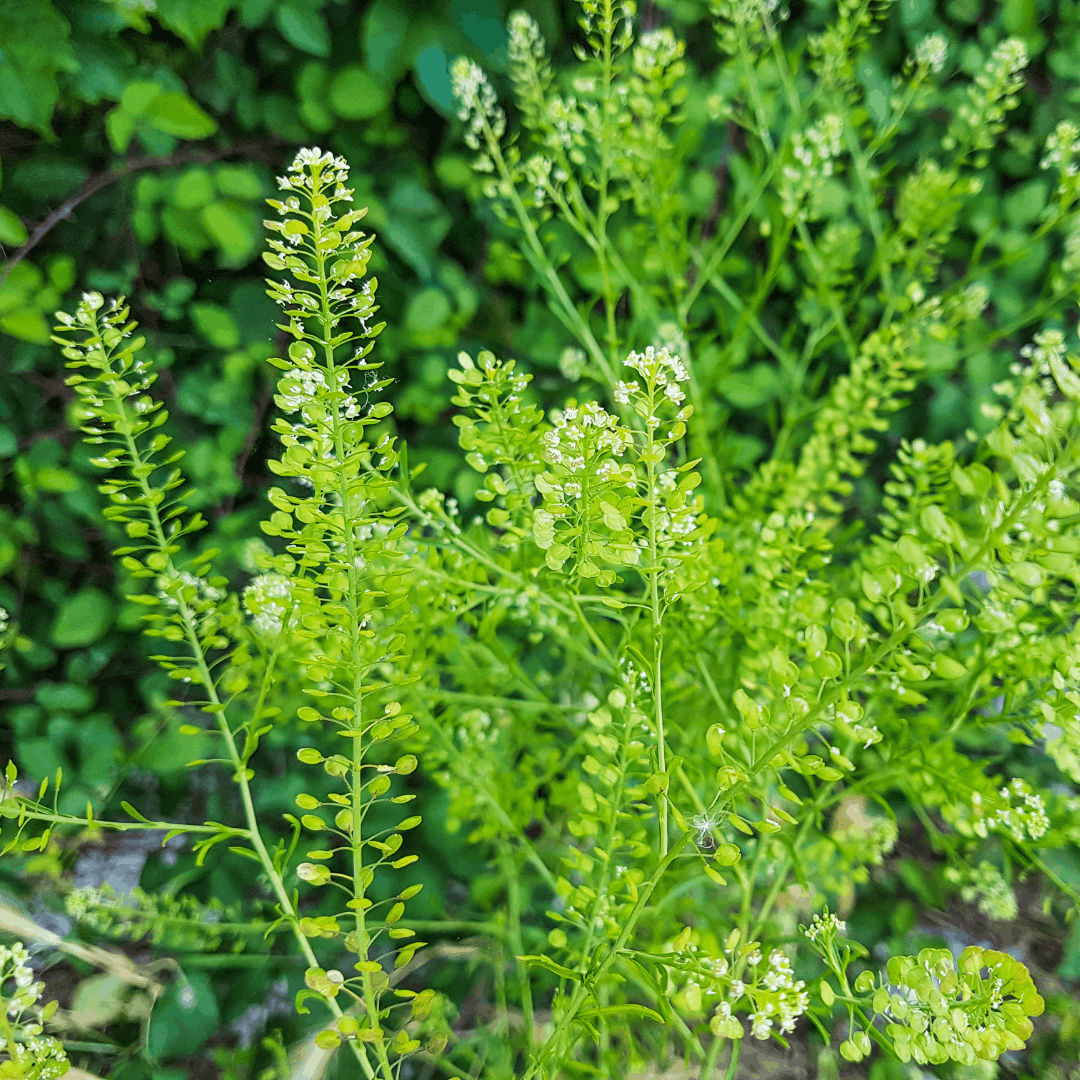
Narrow-leaved pepperwort — also known as stinking pepperwort — is a wild member of the mustard family (Brassicaceae). Native to much of Europe, Central Asia, and the Middle East, it has also naturalised in North America, Australia and New Zealand.
It tends to grow in dry, open, and often overlooked places: along gravel paths, roadsides, railway edges, and in compacted soil where few other plants establish themselves successfully. BUT it can also be cultivated from seed — and this year I’m growing it in my garden!
The seed heads of Narrow-Leaved Pepperwort are small, flat, and almost perfectly circular. They possess a light, floating quality that creates beautifully refined graphic impressions and a gentle sense of rhythm and movement within a print.
In ecoprint, narrow-leaved pepperwort also works especially well as a non-printer, where shape and structure — rather than color — become the defining visual elements. The result is subtle, airy, and highly detailed botanical impressions that layer beautifully within a composition.
This makes narrow-leaved pepperwort especially useful in both ecoprinting and botanical printing where fine structural detail is desired.
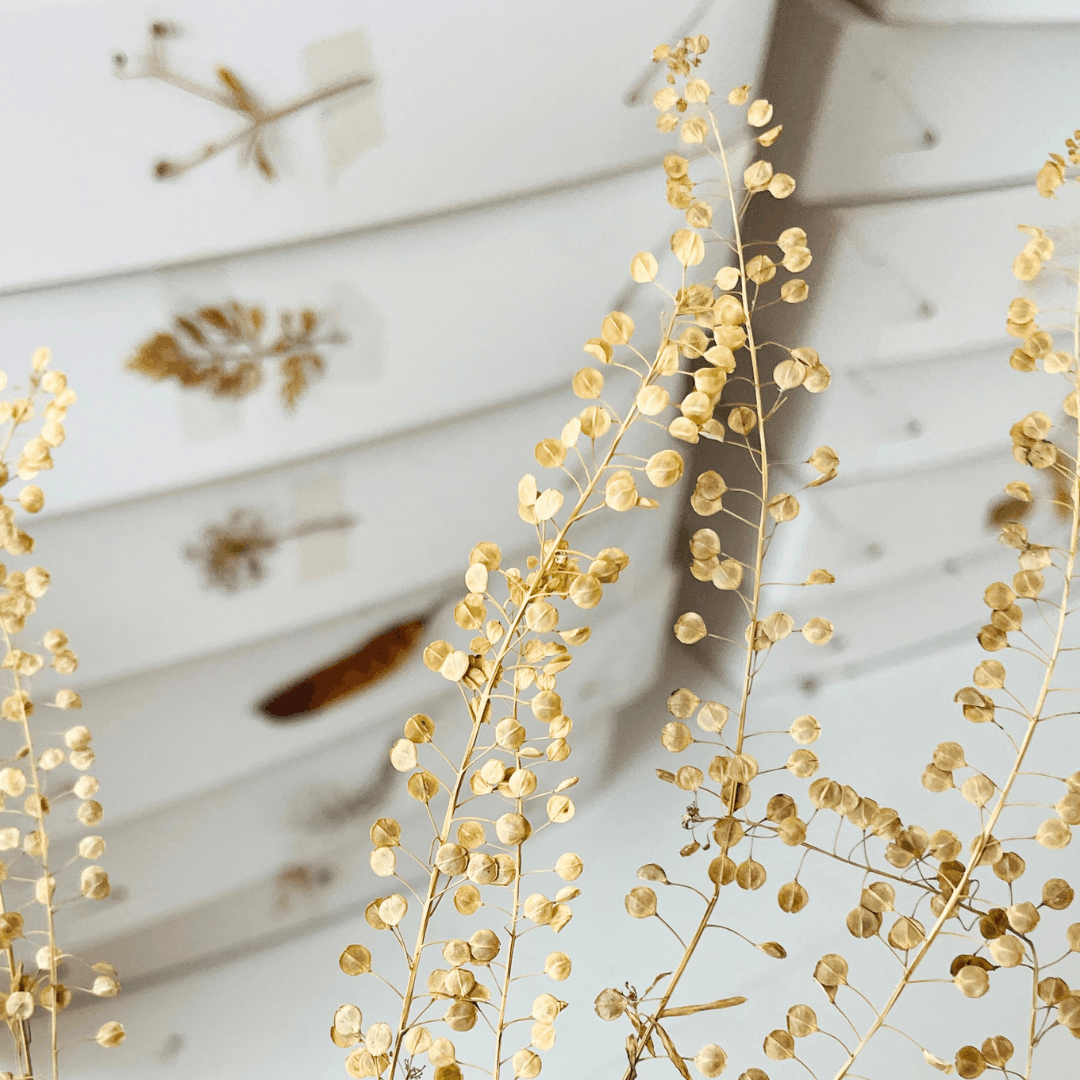
I prefer using these seedheads pressed - because it gives the clearest silhuette.
Learning how to collect seeds and seed heads at the right stage, press them successfully, and store them for later use opens up a much more intentional and flexible way of working throughout the seasons.
That process is something I explore in depth inside Ecoprint Next Level, where I share how I collect, press, preserve, and work with botanical materials in my own studio practice.